
Blaise Pascal – A Thinker for Our Time
Wednesday, September 30, 2026, 12:00 PM Pacific Standard Time
Join us on Zoom Link
https://us06web.zoom.us/j/81841910316?pwd=vXX4nPHTNdFObhZPaO6Dfy9Nubsp8o.1
Abstract
Blaise Pascal was a physicist, a mathematician, an inventor, entrepreneur, philosopher theologian, and polemicist. His famous unfinished apology for the Christian faith – the Pensées – speaks powerfully to the modern world. Positioned between the rationalism of Descartes and the scepticism of Montaigne, he offers a form of Christian faith that speaks to the uncertainties and mysteries of human existence, and in particular, the consciousness of modern humanity within the vastness of the universe. This lecture will explore Pascal’s wisdom for contemporary sensibilities caught between the scientific confidence of modernity and the pessimistic scepticism of late modernity.
Biography
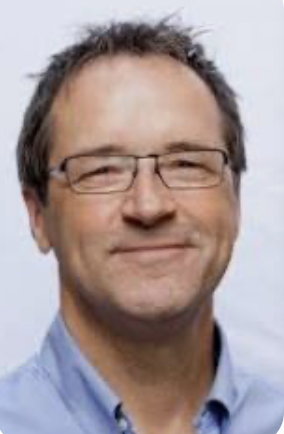
The Rt. Rev. Dr. Graham Tomlin is Editor-in-Chief of SeenandUnseen.com, President of St Mellitus College and Chair of the Inter-Anglican Standing Commission on Unity, Faith, and Order. He was Bishop of Kensington from 2015-22 and Director of the Centre for Cultural Witness from 2022-25. He was the founding Dean of St Mellitus College, and before that, Vice Principal of Wycliffe Hall, Oxford, where he taught Historical Theology within the Theology Faculty of Oxford University. He also served as Chaplain of Jesus College Oxford. He is the author and editor of around 20 books, most recently, Blaise Pascal: The Man who Made the Modern World (Hodder, 2025).
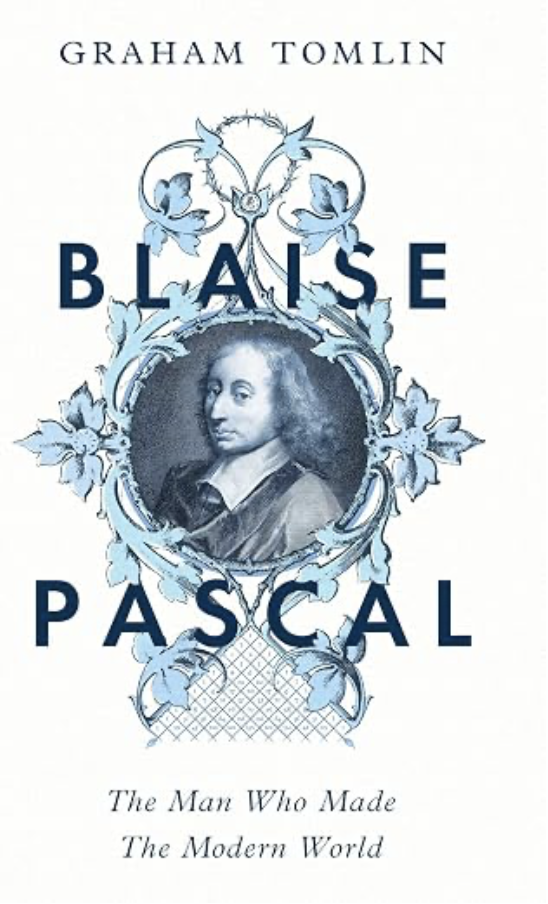
The book is a captivating, accessible biography and intellectual portrait of the 17th-century French polymath Blaise Pascal (1623–1662). Tomlin, a theologian, former Bishop of Kensington, and Director of the Centre for Cultural Witness, presents Pascal as far more than the originator of the famous “Wager.” In a short life of just 39 years, marked by chronic ill health, Pascal made pioneering contributions across science, mathematics, technology, philosophy, and Christian apologetics. He invented an early mechanical calculator (a precursor to the computer), advanced work in geometry and probability theory, proved the existence of the vacuum, contributed to hydraulics, and even designed an early urban public transport system in Paris.
Tomlin portrays Pascal as navigating extremes—combining medieval piety with Enlightenment scientific zeal, reason with faith, intellect with personal experience—and as a figure who both helped shape modernity and offered one of its earliest and sharpest critiques. He argues that Pascal’s insights remain highly relevant to contemporary debates on science and religion, distraction in an information-saturated age, the search for meaning, and the nature of belief. The biography is lively, conversational, scholarly yet readable, and balanced: it celebrates Pascal’s genius while acknowledging traits such as intellectual pride and combativeness. It has been widely praised by figures including Tom Holland, Rory Stewart, Katherine Rundell, and Alister McGrath for its clarity, depth, and ability to make Pascal’s ideas speak to today’s world.
Graham Tomlin’s book presents Pascal as a comet-like genius whose inventions, experiments, and penetrating analysis of the human condition—rooted in a transformative faith—helped forge key features of modernity while offering resources for navigating its challenges today.
Co-sponsored with: Canadian Science & Christian Affiliation
Many thanks to UBC Murrin Fund for their Support
Graduate Sarah Jones Wins Prestigious Peacocke Prize for Science and Religion
Sarah Jones, a graduate of the MSt in Theology, has been awarded the Peacocke Prize for Science and Religion for her paper, The Metaphysics of the God–World Relation within Relational Quantum Mechanics.
The Peacocke Prize recognises outstanding work exploring the relationship between science and religion, and is awarded for innovative scholarship that advances dialogue between these fields. Named in honour of the Revd Dr Arthur Peacocke, the distinguished scientist, theologian and former Director of Oxford’s Ian Ramsey Centre for Science and Religion, the prize celebrates excellence in interdisciplinary research.
Sarah’s winning essay, “The Metaphysics of the God–World Relation within Relational Quantum Mechanics” argues that Carlo Rovelli’s Relational Quantum Mechanics (RQM) and its related formulation of Loop Quantum Gravity (LQG) generate an unresolved metaphysical problem concerning the grounding of relationality. Bringing these scientific frameworks into conversation with Christian theology, the paper draws on the work of Catherine Keller and Jürgen Moltmann to propose a Trinitarian account in which God can be understood as the relational ground of reality. In doing so, it seeks to preserve both scientific realism and theological commitments concerning divine transcendence and sovereignty, while developing a novel conceptualisation of divine presence within an unfolding cosmos.
The Faculty of Theology and Religion warmly congratulates Sarah on this significant achievement and on receiving this prestigious recognition for her scholarly work.
For more details about the Peacocke Prize, visit the Science and Religion Forum website.

