Kevin Vanhoozer on Re-Framing Reality

Our GFCF Speaker Series for the 2025-26 Academic Year: The purpose of GFCF (aka The Forum) is dialogue across disciplines, ideologies, and  philosophical persuasions, engaging key issues in scholarship and society from an orthodox Christian faith. We continue to explore new ideas, offer fresh, well-researched perspectives on current issues. Our target audience for this pertinent dialogue includes the senior members of the UBC teaching and research community: faculty, postgraduate students and postdoctoral fellows. We welcome alumni to participate as well. Our January speaker, Dr. Kevin Vanhoozer, will deliver a newly-minted paper. The venue is on Zoom, and the recordings will be posted on YouTube to allow a broader, international audience to participate. A few of our previous speakers have drawn over one thousand views in this way. Participants for this year are teaching in Israel, South Africa, Chicago, and Virginia. They bring a global perspective to their critical insights. It is our privilege to engage with these accomplished scholars. GFCF welcomes your questions and insights.

Notice: To be added to our mailing list, write: gfcfevents@gmail.com

Kevin Vanhoozer

Three Documents of the University: Reading Nature, Culture, and Scripture Theologically.

Tuesday, January 27, 2026 @ 12:00 PM

Abstract

Universities arguably exist to make the universe legible (readable) and intelligible (understandable). In Christian tradition, what the Second Helvetic Confession calls the “Book” of nature is as readable as the book of Scripture, for both ultimately precede through the Logos in whom all things hang together. The “book” of culture, human history, is similarly legible, because it is written by those created in the image of the Logos. Modern secular universities, however, struggle to make sense of these three documents. What Hans Frei termed the “eclipse” of biblical narrative led to a “great reversal” in hermeneutics in which the biblical narrative gave way to other frames of reference. This presentation argues that the prevailing metaphysical frames of reference used today in the natural and human sciences, as well as in biblical studies, are ultimately unable to read rightly their respective texts. Brief examples from each of the three books – the laws of nature; human dignity; the historical Jesus – illustrate both the problem and also the way forward.  This involves a retrieval of a theological frame of reference that privileges biblical narrative and enables faith-fuelled scholarship to gain a deeper understanding of reality.

Response: Jens Zimmermann, PhD University of British Columbia, PhD Johannes Gutenberg. He is the J.I. Packer Chair of Theology at Regent College. Trained in both Comparative Literature and Philosophy, his research focusses on theological anthropology and epistemology, of who we are and how we know. Among other works, he has published books on university education (The Passionate Intellect: Incarnational Humanism and the Future of University Education, with Norman Klassen, Baker Academic 2006), the importance of humanism for Western culture (Humanism and Religion: A Call for the Renewal of Western Culture, Oxford University Press, 2012), hermeneutics (Hermeneutics: A Very Short Introduction, OUP 2014), and the theology of Dietrich Bonhoeffer (Dietrich Bonhoeffer’s Christian Humanism, OUP 2019). 

Biography 

Kevin J. Vanhoozer (Ph.D., Cambridge University on Paul Ricoeur) is Research Professor of Systematic Theology at Trinity Evangelical Divinity School. Previously, he served as Senior Lecturer in Theology and Religious Studies at the University of Edinburgh, Scotland (1990-98) and as Blanchard Professor of Theology at the Wheaton College Graduate School in Chicago (2009-2012). He is the very articulate author of twelve books, including The Drama of Doctrine: A Canonical-Linguistic Approach to Christian Theology; plus Faith Speaking Understanding: Performing the Drama of Doctrine, and his impressive 2024 volume Mere Christian Hermeneutics: Transfiguring What it Means to Read the Bible Theologically. He is presently at work on a three-volume systematic theology. In 2017, he chaired the steering committee and drafted A Reforming Catholic Confession to mark the 500th anniversary of the Reformation. He is currently Senior Fellow of the C. S. Lewis Institute. He is an amateur classical pianist, and finds that music and literature help him integrate academic theology, imagination, and spiritual formation.

The ancients inhabited a ‘saturated’ frame of reference in which earthly, natural things are transitory signs  of an eternal, supernatural realm of higher realities. Charles Taylor—”Modernity is an 18th century revolution in our social imaginary.” (K. Vanhoozer, Mere Christian Hermeneutics, 79-80).

The Bible’s story, read theologically, is sufficient for enabling us to perceive reality differently–not as a closed patio-temporal material nexus, but as created, sustained, and directed by the triune God. ~Kevin Vanhoozer

_________________

Mere Christian Hermeneutics: Transfiguring What It Means to Read the Bible Theologically (published 2024 by Zondervan Academic) is Kevin J. Vanhoozer’s ambitious proposal for a “mere” Christian hermeneutic—inspired by C.S. Lewis’s Mere Christianity—that outlines essential, universal principles for reading the Bible faithfully as Scripture across all times, places, denominations, and Christians. It is very ambitious, taking me back through my whole history of theological training and decades of debate (even one between Hans Boersma and Iain Provan at Regent College).

The book addresses two major challenges in biblical interpretation:

  • The diversity of interpretations even within single Christian communities. We seldom examine this phenomenon in our churches or think more deeply about the kind of Bible reading culture(s) that exists there.
  • The plurality of “reading cultures” (denominational, academic/disciplinary, historical, and global), each with its own interpretive framework–critical to his thesis. This is what he means by the term ‘hermeneutics’.

Vanhoozer responds by advocating a unified yet diverse approach that bridges the somewhat painful and unnecessary modern divide between biblical studies (often focused on historical-grammatical exegesis) and theology (focussing on larger biblical themes). He critiques polarized “reading cultures” and calls both exegetes and theologians to return interpretation to the church as the primary community for faithful reading. There is a definite existential aspect of his approach. In the end, he wants us to get much more from reading and interpreting the Bible for life lived robustly.

The Central Metaphor and Thesis: The book’s core working image is the transfiguration of Jesus on Mount Tabor (from the Gospels), which Vanhoozer uses to reframe theological interpretation. Many interpreters miss this powerful biblical metaphor. He argues that figural (or “spiritual”) reading does not distort or deny the literal sense (sensus literalis) but glorifies and transfigures it—revealing its deeper, eschatological and Christ-centered meaning. He sees a ‘christocentric’ and ‘christoscopic’ nature to the larger biblical narrative.

He introduces “trans-figural” interpretation as a better alternative to traditional terms like typology or allegory:

  • It “thickens” the literal sense by following biblical figures across the canon and across redemptive history to their fulfillment in Christ. He fulfills the law and the prophets, fills out their meaning.
  • It views the literal sense not as merely historical/earth-bound but as eschatologically oriented toward God’s ultimate revelation in Jesus. Scripture is always connected with eternity, the transcendent.
  • Interpretation therefore becomes a matter of seeing the light of Christ shining through Scripture, transforming both the text’s meaning and the reader. Vanhoozer sees a major emphasis on the “economy of light” across the biblical narrative–from Genesis to Revelation.

This leads to a vision where reading Scripture is intensely dialogical (a response to God’s powerful address and calling to humans), transformative (conforming readers to Christ’s image), and oriented ultimately toward worship, gratitude, and witness. He employs speech act theory (J. L. Austin) and terms like “communicative action” by God to reveal this dynamic. He is known for his very clever usage of contemporary literary devices as we dig deeper to understand Scripture as a living thing that moves a person’s universe.

Book Structure: The book is organized as an “experiment in biblical-theological criticism” divided into three parts:

Part 1: Reading the Bible inside and outside of Church — Surveys the “divided domain” of interpretation, critiques polarized reading cultures (e.g., between modern biblical scholarship and theology), and calls for church-centered approaches that form “gospel citizenship” rather than mere literacy. He appeals for a more mature “Bible reading culture.”

Part 2: Figuring Out Exactly What We Mean by Literal Interpretation — This is critical to his thesis. He redefines the sensus literalis beyond narrow grammatical-historical senses to include eschatological reference and figural depth, moving toward a “trans-figural” literal sense in a “reformed catholic” (Christ-focused, broadly orthodox) paradigm. That’s a mouthful. 

Part 3: Transfiguring Literal Interpretation — Applies the transfiguration motif extensively:

  • Explores light imagery in creation (e.g., Genesis 1:3).
  • Examines the transfiguration accounts in the Synoptics and John.
  • Shows how trans-figural reading “unveils” the glory in the letter (e.g., via Paul’s reading of Moses’ veil in 2 Corinthians).
  • Concludes with how readers themselves are transfigured/transformed through faithful engagement with Scripture and obedience to its tenants (“with unveiled faces”). Kierkegaard would be happy with this stance.

The conclusion envisions “beatific lection”—reading that leads to beholding Christ’s glory and fostering transfigured Christian communities. If we read the Scripture properly, we should be permanently changed by the living, breathing Word of God.

Overall, Vanhoozer’s work is irenic (peace-seeking without shallow compromise), richly interactive with historical interpreters, intensely creative, and provocative. It is a great senior seminar textbook (ThM). It emphasizes that true interpretation glorifies God by enabling us to see and reflect Christ’s light in Scripture out into the world. Reviews, leading to its prize-winning status (Christianity Today’s Book go the Year), praise its depth, creativity, and potential as a landmark in theological hermeneutics, while noting its demanding style and Western focus. It’s aimed at pastors, scholars, and serious readers seeking to read the Bible theologically in a fragmented age, appealing to a much larger frame of reference than we often encounter in the university.

“To read the Bible as God’s word is therefore to encounter something that is living and active: the voice of God, God personally speaking, the triune God in communicative action, doing things with, in, and through human words.” (K. Vanhoozer, 2024, 9) 

Finding God Through Richard Dawkins

Denis Alexander

Biomedical (Cancer) Researcher, Cambridge University 

Finding God Through Dawkins: a Dramatic Irony

Summer Regent College Course: Current Issues in Science & Theology with Denis Alexander

May 26–30 • 1:30–4:30 pm1–2 Credits (1 Audit) • INDS/THEO 548

How should we understand the relationship between theology and science? How should this understanding shape our daily lives and decisions? Gain fresh insights as we consider some key theological and ethical issues in the biological sciences. Together, we’ll explore questions around creation and evolution; the role of genetics in human behaviour; the relationship between brain, mind, and free will; and distinctions between healing and enhancement.


Abstract  

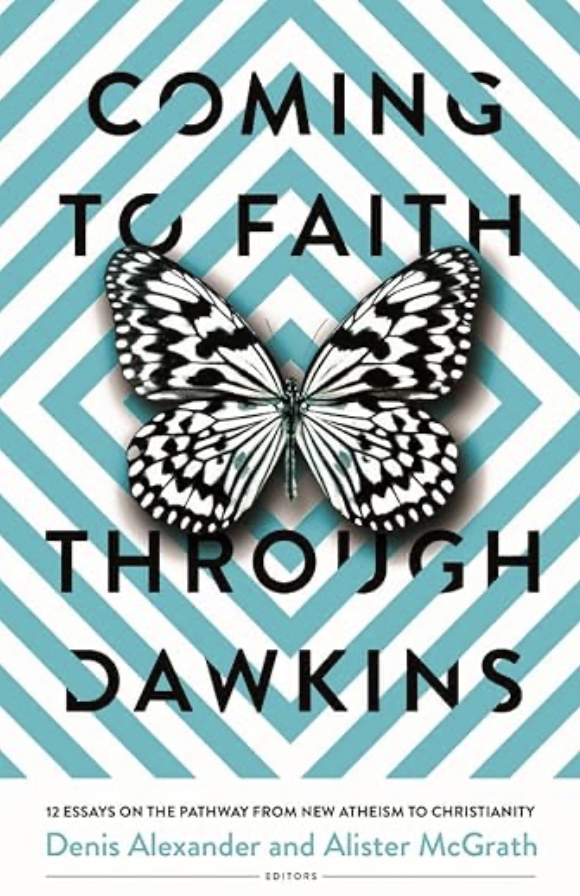
The so-called ‘New Atheism’ movement that came to prominence in the earlier part of this century has now declined. However, it has left in its wake an intriguing residue of religious and cultural consequences. One of the most prominent spokespersons for the movement has been Professor Richard Dawkins from Oxford University. The 2023 Kregel book, co-edited by Alister McGrath and Denis Alexander, Coming to Faith Through Dawkins, comprises twelve essays written by twelve different authors from five different countries, describing how the works of Dawkins and other New Atheist writers were influential in leading them from atheism or agnosticism to Christian faith. This lecture will review the roots of the New Atheism movement, and why it has led some former skeptics to Christian faith.  

Biography  

Denis Alexander, PhD, a noted geneticist, biochemist, and cancer researcher, is the Founding Director (Emeritus) of The Faraday Institute for Science and Religion, Cambridge, where he is Emeritus Fellow of St. Edmund’s College. He is past Chair of the Molecular Immunology Program and Head of the Laboratory of Lymphocyte Signalling and Development at The Babraham Institute, Cambridge. Dr. Alexander’s latest books are: Is There Purpose in Biology? Oxford: Lion, 2018; and Are We Slaves to Our Genes? Cambridge University Press, 2020. He gave the 2012 Gifford Lectures at St. Andrew’s University.

Book Review https://medium.com/@pkajjohnson/book-review-coming-to-faith-through-dawkins-12-essays-on-the-pathway-from-new-atheism-to-5a99f722e687

See also Historian Sarah Irving-Stonebraker on deconstructing atheism in science: https://www.youtube.com/watch?v=Wm-P6YNddyw

GFCF Mailing List: gfcfevents@gmail.com to be added to our information flow about future events.

“Faith is more than evidence and reason, but it is definitely not less.” ~Johan Erasmus, working on his PhD at North-West University in South Africa on the subject of race and reconciliation

“The promotion of a naive humanism predicated upon a noble savage embodying humanity’s innate goodness, free from the corruption of civilization, might lead to a crippling narcissism. In a universe where humans are basically all good, it makes sense that people who disagree with me are basically all bad.” ~Johan Erasmus, South Africa 

“Dawkins acknowledges that a simple survival-of-the-fittest explanation is not sufficient to explain morality.” ~Nick Berryman, an Engineering Manager for a cutting-edge technology company

“The Christian explanation is that an intelligent designer is the ultimate source [of information]. This is not a “God of the gaps” argument. Coded information when found is always regarded as evidence of an intelligent source. This is true when archaeologists discover ancient symbols. It would be true if scientists discovered a coded message from outer space.” ~Nick Berryman

Biological Complexity: “Dawkiinites seem to agree that as a complex phenomenon, life is statistically highly improbable, and as improbable as it is, chance (in its metaphysical sense) is not a satisfactory explanation as to how the wondrous complexity of life on Planet Earth came about…. Contrary to Dawkin’s claims, natural selection does not overcome the problem of the statistical improbability of the occurrence of life…. Dawkins commits the category mistake by treating probability as a property of complexity. ~Louise Mabille, a Nietzsche scholar

Many Thanks to the UBC Murrin Fund + the Canadian Scientific & Christian Affiliation

Recent Selected Alexander Publications in Science and Religion

  • Alexander, D. R. (2001) ‘Rebuilding the Matrix – Science and Faith in the 21st Century’, Oxford: Lion Publishing, hb 512 pp. pb edn 2002. US hb edn 2003; French edn 2004; Turkish edn 2010; Chinese edn 2013.
  • Alexander, D.R. and White R.S. (2004) ‘Beyond Belief – Science, Faith and Ethical Challenges’ Oxford: Lion Publishing.
  • Alexander, D.R. (Ed + Chapter). (2005) ‘Can We Know Anything? Science, Faith and Postmodernity’, Leicester: Apollos.
  • Alexander, D.R. (2008) ‘Science and religion – negotiating the 21st century rapids’, in A. Bentley (ed) The Edge of Reason, London: Continuum.
  • Alexander, D.R. (2008, 2nd edn 2014) ‘Creation or Evolution – Do We Have to Choose?’, Oxford: Monarch.
  • Alexander, D.R.and Numbers, R.L. (eds) (2010) ‘Biology and Ideology from Descartes to Dawkins’, University of Chicago Press.
  • Alexander, D. R. (2011) ‘The Language of Genetics – an Introduction’. Philadelphia: Templeton Foundation Press and London: Darton, Longman & Todd.
  • Alexander, D.R. (2012) ‘A Critique of Intelligent Design’ in Darwinism and Natural Theology: Evolving Perspectives (ed Andrew Robinson), Newcastle: Cambridge Scholars Publishing.
  • Alexander D.R. (2012) ‘Science and Religious Belief in the Modern World: Challenges and Opportunities’ in Science and Religion: Christian and Muslim Perspectives (ed David Marshall), Georgetown University Press, pp 35-45.
  • Alexander D.R. (2012) ‘Creation and Evolution’ in Blackwell Companion to Science and Christianity (eds James Stump and Alan Padgett), pp 233-245.
  • Alexander, D.R. (2012) ‘The Spirit of God in Evolutionary History’ in The Spirit in Creation and New Creation[ed Michael Welker], Eerdmans, 2012.
  • Alexander, D.R. (2013) ‘L’age d’Adam: deux modeles pour le dialogue entre la Genese at la Science’, in Adam qui es-tu? (Lydia Jaeger, ed), Paris: Editions-Excelsis, pp. 111-128.
  • Alexander, D.R. (2013) ‘The Implications of Evolution for Religious Belief’ in K. Kampourakis (ed) Philosophical Issues in Public Education, Springer, pp 179-204.
  • Alexander, D.R. (2013) in Can Science Dispense With Religion? (ed. Mehdi Golshani), Amin Research and Cultural Center, Malaysia, pp. 21-39.
  • Alexander, D.R. (2014) ‘Order and emergence in biological evolution’, Faith & Thought, April, pp. 18-38.
  • Alexander, D.R. (2014) ‘The Faraday Institute for Science and Religion – the First Seven Years’, in The Science and Religion Dialogue[Michael Welker, ed], Peter Lang, pp73-86.
  • Whiteway E. and Alexander, D.R. (2015) ‘Understanding the Causes of Same-Sex Attraction’, Science and Christian Belief, 27:17-40.
  • Alexander, D.R. [2017] Genes, Determinism and God, CUP [The Gifford Lectures].
  • Alexander, D.R. [2018]. ‘Creation, Providence and Evolution’ in Andrew B. Torrance and Thomas H. McCall [eds] Knowing Creation Vol 1, Zondervan, pp. 261-285.
  • Alexander, D.R. [2018] Is There Purpose in Biology?, Oxford: Monarch.
  • Alexander, D.R. [2018] ‘Order and Emergence in Biological Evolution’, in Gerrit Glas and Jeroen de Ridder (eds), The Future of Creation Order, Springer, pp 151-169.
  • Alexander, D.R. [2019] ‘Healing, Enhancement and the Human Future’, Case Quarterly 53: 4-9, 2019.
  • Alexander, D.R. [2020] Are We Slaves to Our Genes? [Cambridge University Press]

See also a similar theme http://www.cbc.ca/ideas/episodes/2012/10/22/the-myth-of-the-secular-part-1/

W. T. Cavanaugh Critiques Consumer Culture

William T. Cavanaugh

Professor of Philosophical Theology at DePaul University

Tuesday, September 24, 2024 @ 4:00 PM   


Abstract

This lecture explores two sides of the modern economy: the rationalized and disenchanted world of the Amazon warehouse, and the enchanted world of products that magically appear on our doorsteps.  Dr. Cavanaugh will argue that these are two sides of the same coin.  First, he will show that even Max Weber himself could not shake free of the idea that modernity was haunted by enchantment in production.  Second, he will look at Karl Marx’s analysis of enchantment in consumption.  Finally, he will argue that the biblical concept of idolatry captures our current cultural moment: a shift in what we worship to things of our own creation.

Biography

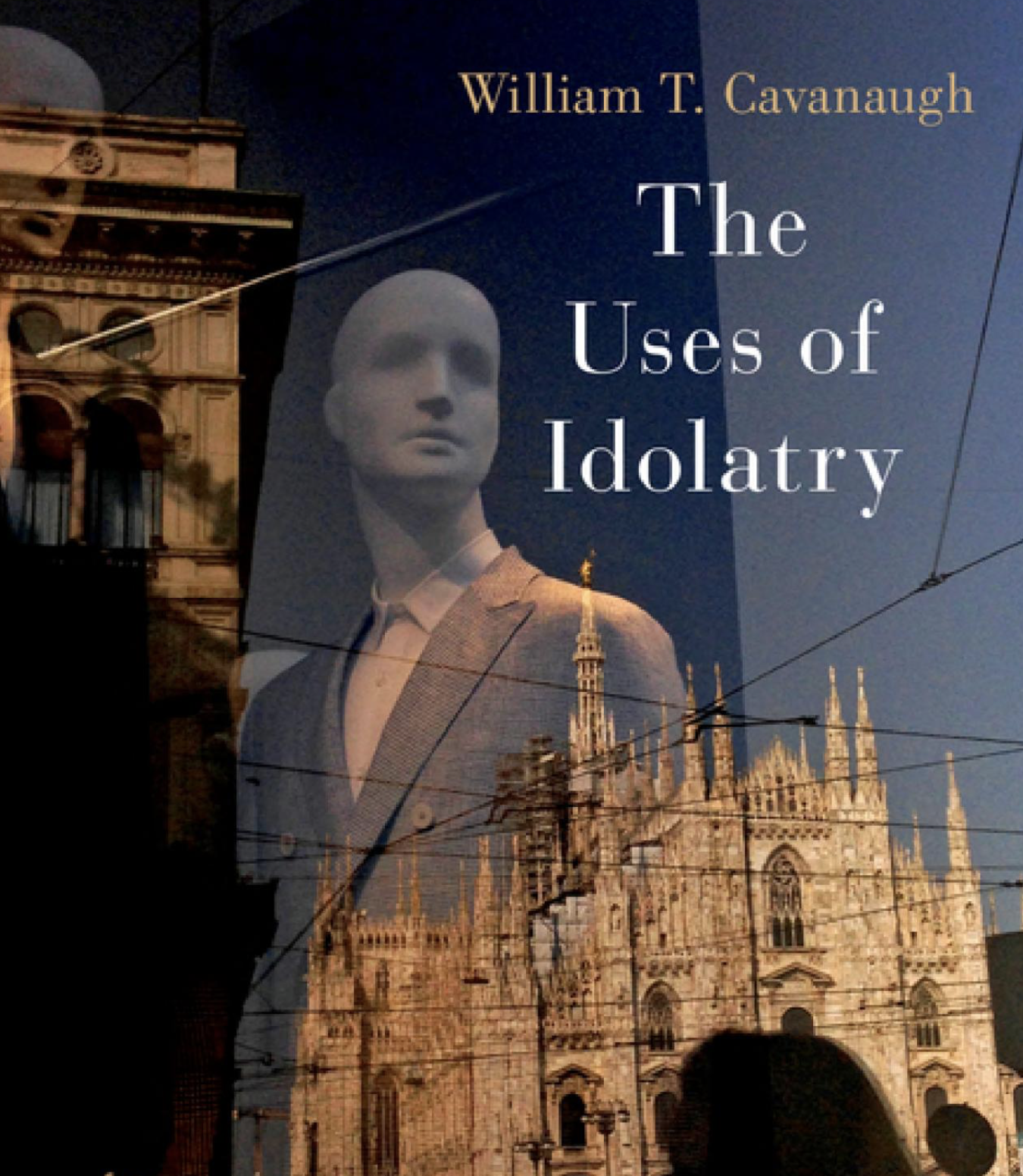
William T. Cavanaugh, PhD from Duke University, is Professor of Catholic Studies and director for the Centre for World Catholicism and Intercultural Theology at DePaul University in Chicago. He is the author of The Myth of Religious Violence, Oxford University Press, 2009; and The Uses of Idols, Oxford University Press, 2024. His specialty is political theology, economic ethics, and ecclesiology. In his 2024 tome, Dr. Cavanaugh reveals his excellent scholarship in this deeply researched topic of cultural idolatry, offering a sustained, cogent, sympathetic critique in a wonderful model of public theology. This impressive work ranges across the fields of history, philosophy, political science, sociology, and cultural studies. For this lecture, special attention to chapters 3. and 7. will help.

See also https://www.firstthings.com/web-exclusives/2024/09/the-metaphysical-promise-of-the-consumer-society

“Idolatry is the human creation of systems that react back upon us and come to dominate us as false gods.” ~Bill Cavanaugh

Cavanaugh’s Research Interests

His major areas of research have to do with our encounter/engagement with social, political, and economic realities. He has authored six books and edited three more. His books and articles have been published in 10 languages. He has dealt with themes of the Church’s social and political presence in situations of violence and economic injustice. He just recently published a book on secularization and idolatry, called The Uses of Idolatry, exploring the ways in which a supposedly disenchanted Western society remains enchanted by nationalism, consumerism, and the cult of celebrity. He teaches in an interdisciplinary way, showing the riches and challenges of Christian tradition through art, theology, scripture, music, poetry, history, novels, etcetera.

Jean-Luc Marion once described idolatry as the ‘low water mark of the divine.’ What he meant was: it is not something to be dismissed. Idolatry, too, is a sort of revelation. William Cavanaugh’s careful, sympathetic exercise in this important book embodies this approach. Akin to Augustine’s theologically inflected ethnography of the late Roman Empire, here Cavanaugh ‘reads’ the rituals of late capitalism in order to discern the devotions of our so-called secular age. But he does so in the spirit of invitation, not denunciation. A wonderful model of public theology written for a wide audience. (James K. A. Smith, author of How (Not) to Be Secular).

Book Review of The Uses of Idolatry

 Tearing down idols: William Cavanaugh’s theology is a must-read for the modern West | America Magazine

“The church is the incubator and the epicentre of counter-desire.” writes former GFCF lecturer Christopher Watkin in Biblical Critical Theory. (473-76) What are the rhythms of our hearts? The contrast below constitutes a veritable manifesto for an alternative outlook/lifestyle. Dr. Christopher Watkin contrasts consumption-desire and biblical intimacy-desire.

  1. Consumption-desire is centred in the consumer, who is always right and votes with the wallet. Intimacy-desire has two poles, the lover and the beloved, who both shape the relationship. Here freedom is defined by the ability to love and give life to one another.
  2. Consumption-desire is cyclical: lack, desire, consumption, satisfaction, dissatisfaction, repeat. Intimacy-desire forges a cumulative depth of relationship over time, investing over and over again continuously.
  3. Consumption-desire is fuelled by the noble lie of ultimate fulfilment–every product and pleasure contributes to the good life. Intimacy-desire is driven by the promise of ultimate fulfilment when “the kingdom of the world has become the kingdom of our Lord and his Messiah.” It seeks to fan into flame, develop and cultivate existing desires to meet the deepest human needs–it is servanthood-oriented or other-oriented.
  4. Consumption-desire is economic, obeying the laws of scarcity, equivalence, merit, and performance. It is motivated by debt. Intimacy-desire is aneconomic, running free in world of bounty, superabundance, gift, and grace. It is motivated by thankfulness and generosity. The principle is: the more I give away, the more I have.
  5. Consumption-desire is mediated by corporations who like monetizable assets like labour, money, our data. It is based on an investment of capital. It calculates and focuses on one’s use value. Intimacy-desire is unmediated: God and church do not want your monetizable assets; they want you, yourself as an end, a valuable image bearer, a member of a family. It is based on an investment of character and wants your full enjoyment/flourishing. 
  6. Consumption-desire tends towards restlessness; Intimacy-desire tends towards rest.
  7. Consumption-desire understands pain as lack, to be remedied by further consumption. Intimacy-desire sees pain as growth, to be worked through and harnessed to deepen the relationship.
  8. Consumption-desire is indexed by possessions. Growth comes through accumulating more things, more money and assets. Intimacy-desire is indexed by dispossession–I lose my life in order to save it. My liberation/fulfilment is through self-forgetfulness, kindness, and generosity.

“The power and wisdom we desire, the love and freedom, the rest and satisfaction, the justice and fullness calls us forward…. The cross of Christ is the narrow road to the transfigured fullness of every human desire.” (Christopher Watkin, Biblical Critical Theory, 2022, 433)

Quotes from The Uses of Idolatry

“Circulation, not accumulation, is the point of a gift economy. Abundant life is not defined as possessing more things but as participating in the common good, the circulation of goods to all…. All goods belong to God, are inaugurated by God. What is needed is an economy based in gratuitousness and communion. We are recipients of God’s [superabundant generosity]. The most fulfilled people are those who communicate life to others. Jesus summons us to the revolution of tenderness. Going up against idolatry is fundamentally an act of thanksgiving for all the good gifts that God has lavished upon us. “ (William T. Cavanaugh, The Uses of Idolatry, 2024, 387)

Our identity as consumers has become our primary—though not our only—identity. We are not primarily warriors or workers or prayers, but consumers, and we define who we are and who we aspire to be through consumption…. There is no benevolent and sovereign subject who becomes self-contradictory in a capitalist society; rather the human subject as such is self-contradictory, both altruistic and selfish, aware and unaware, rational and irrational. Freud connects consumerism with narcissism directly in his discussion of how parents shower their children with gifts as a way to satisfy their own narcissistic desires, while simultaneously thinking of themselves as altruistic…. Narcissism and idolatry are two sides of the same coin, and they lead to diminution of the self. True freedom is found in service to the Creator of that material world; a healthy engagement with the material world requires humility.(W. T. Cavanaugh, 2024, 289, 327, 329)


2. November 7, 2024 @ 12:00 PM   Denis Alexander. Finding God Through Dawkins: a Dramatic Irony

Abstract  The so-called ‘New Atheism’ movement that came to prominence in the earlier part of this century has now declined. However, it has left in its wake an intriguing residue of religious and cultural consequences. One of the most prominent spokespersons for the movement has been Professor Richard Dawkins from Oxford University. The 2023 Kregel book, co-edited by Alister McGrath and Denis Alexander, Coming to Faith Through Dawkins, comprises twelve essays written by twelve different authors from five different countries and describes how the works of Dawkins and other New Atheist writers were influential in leading them from atheism or agnosticism to Christian faith. This lecture will review the roots of the New Atheism movement, and why it has led some former skeptics to Christian faith.  

Biography Denis Alexander, a noted geneticist, biochemist, and cancer researcher is the Founding Director (Emeritus) of The Faraday Institute for Science and Religion, Cambridge, where he is Emeritus Fellow of St. Edmund’s College. He is past Chair of the Molecular Immunology Programme and Head of the Laboratory of Lymphocyte Signalling and Development at The Babraham Institute, Cambridge. Dr. Alexander’s latest books are: Is There Purpose in Biology? Oxford: Lion, 2018; and Are We Slaves to Our Genes? Cambridge University Press, 2020. He gave the 2012 Gifford Lectures at St. Andrew’s University.


3. Thursday, January 30, 2025 @ 4 PM  Jeremy Begbie, Professor of Theology and Music, Duke University  C. S. Lewis and Unfulfilled Longing: An Exploration through Music

Abstract  C. S. Lewis famously spoke of fleeting experiences of joy he had early in life, a longing for something this world cannot satisfy. Dr. Begbie will creatively explore this through music, comparing this pre-Christian unfulfilled desire with Christian hope. 

Biography Jeremy Begbie is the Thomas A. Langford Distinguished Research Professor of Theology at Duke Divinity School, and McDonald Agape Director of Duke Initiatives in Theology and the Arts. He teaches systematic theology, and specializes in the interface between theology and the arts. He is Senior Member at Wolfson College, Cambridge, and an Affiliated Lecturer in the Faculty of Music at the University of Cambridge. His books include Theology, Music and Time (Cambridge University Press); Resounding Truth: Christian Wisdom in the World of Music (Baker/SPCK); and Music, Modernity, and God (Oxford University Press); and Abundantly More (Baker). He is a very engaging speaker who has taught widely in the UK and North America, and delivered multimedia performance-lectures in many parts of the world.


4. Tuesday, March 4 @ 12:00 PM  Quentin Genuis  Rethinking Medical Ethics in Light of the Good.

Abstract What features define human life and the value of the individual? How do individuals and communities understand and withstand suffering and pain? What is good dying? In our time, the essential human questions are often viewed primarily as bioethics issues. In reality, these are not exclusively medical or bioethical inquiries. Rather they are complicated and challenging ethical questions with which all human beings and societies must grapple. How does Christian philosophy and theology inform these life and death questions at deeper, more foundational levels?

Biography Dr. Quentin Genuis MD is an Emergency Physician at St. Paul’s Hospital in Vancouver, and the Physician Ethicist for Providence Health Care. He holds a Master of Letters in Ethics from the University of St. Andrews, Scotland. He teaches in academic, clinical, professional, and lay settings on a variety of issues related to bioethics. His research and writing interests include the autonomy debates, end-of-life care, compassion, human dignity, addictions, and theological anthropology.