The question of the relationship between Christianity and culture increasingly takes centre stage in debates both within and outside the church today. This talk reflects on how a constructive, nuanced and—to many modern ears—fresh vision for contemporary society can be drawn from a rich engagement with the Bible’s storyline, guided by Augustine’s magisterial work City of God. What might it look like to reimagine Augustine’s mode of engagement with late Roman society in our own cultural moment of late modernity?
Biography
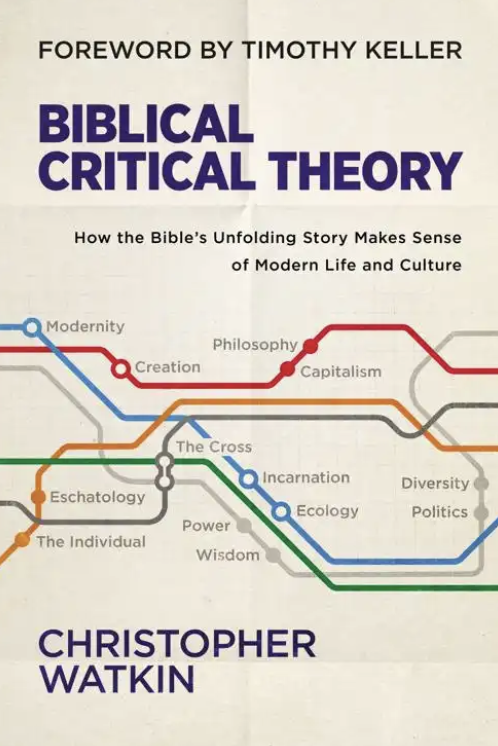
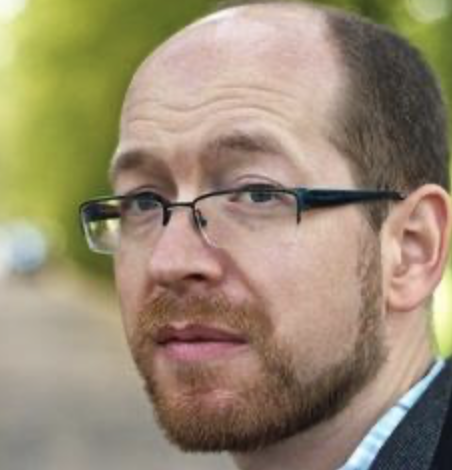
Christopher Watkin (PhD, University of Cambridge) is senior lecturer in French studies at Monash University in Melbourne, Australia. He is a scholar with an international reputation in the area of modern and contemporary European thought, atheism, and the relationship between the Bible and philosophy. His published work runs the spectrum from academic monographs on contemporary philosophy to books written for general readers, both Christian and secular, and include Difficult Atheism, From Plato to Postmodernism; Great Thinkers: Jacques Derrida. His recent impressive 2022 tome with Zondervan Academic is Biblical Critical Theory: How the Bible’s Unfolding Story Makes Sense of Modern Life and Culture.
Australian Book Prize 2023
From GFCF,a new book companion volume to Biblical Critical Theory,available on Amazon
Gordon Carkner’s 2024 Towards an Incarnational Spiritual Culture, from Wipf & Stock Publishing
Quotes from Biblical Critical Theory
The paradigm of the gift places us in the posture of recipients. We receive existence, we receive meaning, and we receive love. To be sure we are creative recipients, as we shall see in the chapters that follow, and receiving the gift of the universe certainly does not make us passive. But the fact remains that we are recipients nonetheless. The one thing we should not do with a gift is pretend we bought or made it ourselves. The giver is usually thanked, so our fundamental orientation to existence in the paradigm of the figure of gratuity is one of praise and thanksgiving.
To live and die by the dynamics of “making a name for ourselves” is to submit to a court of a public opinion which only allows certain achievements to count, and it is to give a warped view of life in which value is ascribed to our words and deeds according to the fickle tastes of the crowd.
Over the past century or so, as values of duty, collective identity, and conformity have been overtaken by a premium on nonconformity and what philosopher Charles Taylor calls “expressive individualism,” we have been increasingly told that we live our best life when we go our own way, in the face of what “they” tell us to do. And so we obediently obey this ubiquitous social command to be our own master and blaze our own trail. (Christopher Watkin, Biblical Critical Theory)
Theological Implications of the Natural Origins of Life
Thursday, November 23, 2023 @ 4 PM
Live in Woodward (IRC) Room 3, UBC
Video no longer available
Abstract
Widespread scientific confidence in there being a natural origin of life, rather than a supernatural one, is a latecomer in the history of thought, held back as much by scientific considerations as by belief that this is more the purview of religion. Yet, over the course of the past century, a natural origin has become the default position. Surprisingly little theological thought has been given to that, with the mainstream churches taking a natural origin for granted, while some more conservative traditions hold out against the possibility. In this talk, Professor Davison will sketch this history, and argue that while Christian theology can take a natural origin to life in its stride, that deserves more attention than it often gets.
Biography
One of the founders of the Cambridge Leverhulme Centre for Life in the Universe, Andrew Davison is the Starbridge Professor of Theology and Natural Sciences at the University of Cambridge, and Fellow in Theology and Dean of Chapel at Corpus Christi College. He is the author of many books, including Participation in God: A Study in Christian Doctrine and Metaphysics and Astrobiology and Christian Doctrine: Exploring the Implications of Life in the Universe (both Cambridge University Press).
“Something objective underlies any true sense of things, whether in knowledge of a creature, or in a creature’s witness to God. It does not require a denial of contingency, however, or mediation when it comes to knowing…. However, none of those elements of contingency, mediation, or particularity need undo the realist sense that, at root, knowledge is a witness to reality, based on a reception from that reality. To be true, knowledge need only to be a faithful participation in it, a faithful reception from it.”(A. P. Davison, Astrobiology and Christian Doctrine, 129-30)
“The emergence of life within the realm of the non-living is a shift of the highest significance. It is so profound, on a qualitative level, as to render quantitative comparison otiose…. Above all, Christian theologians would want to say that the Incarnation, even more than the presence of human life, crowns the extraordinary dignity of life on Earth, or the dignity of the entire cosmos.” (A. P. Davison, Astrobiology and Christian Doctrine, 81)
“[Life] infuses [the living thing] with an increased perfection, a more intense degree of being. We may say, therefore, that living things exist more intensely; they have a higher pitch of being: they are more. The flower growing unobserved and hidden in a crevice upon the highest mountain has greater interiority and intensity of being: it is more than the mountain, greater in its interior perfection than the giant and majestic beauty of the physical universe: it is more. In this light we may read Acquinas’ remark: nobilis cuiuscumquerei est sibi secundum sum esse [Every excellence in any given thing belongs to it according to its being].” (Fran O’Rourke, ‘Virtus Essendi: Being in Pseudo-Dionysius and Acquinas,’ Dionysius 15 (1990): 68-9.
“The distinction and multitude of things come from the intention of the first agent, who is God. For he brought things into being in order that goodness might be communicated to creatures, and be represented by them; and because his goodness could not ne adequately represented by one creature alone, he produced many and diverse creatures, that what was wanting to one in representation of divine goodness might be supplied by another. For goodness, which in God is simple and uniform, in creatures is manifold and divided and hence the whole universe together participates the divine goodness more perfectly, and represents it better than any single creature whatever.” (Thomas Acquinas, Summa Theologica, I.47.1)
“This is not a book that predicts the future. It asks only ‘What if there is life in the Universe, beyond the bounds of Earth?’ Does such a postulate influence Christian doctrine? There are two motives in the mind of the author: (i) to prepare the human community to be ready to receive and process future signs of life elsewhere and (ii) after a journey in unfamiliar territory, to return home with fresh eyes. In nineteen tightly packed chapters, Andrew Davison, a metaphysical realist, addresses theological implications of the 1995 discovery of an exoplanet orbiting another star like our own sun. Our understandings of creation, revelation, uniqueness, Christology, eschatology and much else are given a fresh coat of paint. This is a must read for all of us.” (Dr. Olav Slaymaker, Professor Emeritus Geography, UBC)
p.s. I am fascinated by Andrew’s book both in terms of it’s intellectual honesty and it’s identification with metaphysical realism. His careful discussion of the contemporary relevance of Aquinas is also new for me.
Cosponsorsedby:
Next GFCF Event:
Christopher Watkin, French Studies, Monash University, Melbourne, Australia.
February 7, 2024 on Zoom
The Bible as a Tool for Changing Culture.
Biography: Christopher Watkin (PhD, University of Cambridge) is senior lecturer in French studies at Monash University in Melbourne, Australia. He is a scholar with an international reputation in the area of modern and contemporary European thought, atheism, and the relationship between the Bible and philosophy. His published work runs the spectrum from academic monographs on contemporary philosophy to books written for general readers, both Christian and secular, and include Difficult Atheism, From Plato to Postmodernism; Great Thinkers: Jacques Derrida. His recent impressive 2022 tome with Zondervan Academic is Biblical Critical Theory: How the Bible’s Unfolding Story Makes Sense of Modern Life and Culture. “This is one of the most brilliant, wisdom-packed books that I have read in some time. Chris is so well-read and thoughtful, a real boon to the Christian faith and thought.” ~Dr. Gordon E. Carkner
Artificial Intelligence and the Future of Humanity
Tuesday, October 3 @ 12:00 noonon Zoom
Response from Professor Craig Gay, Regent College
Abstract
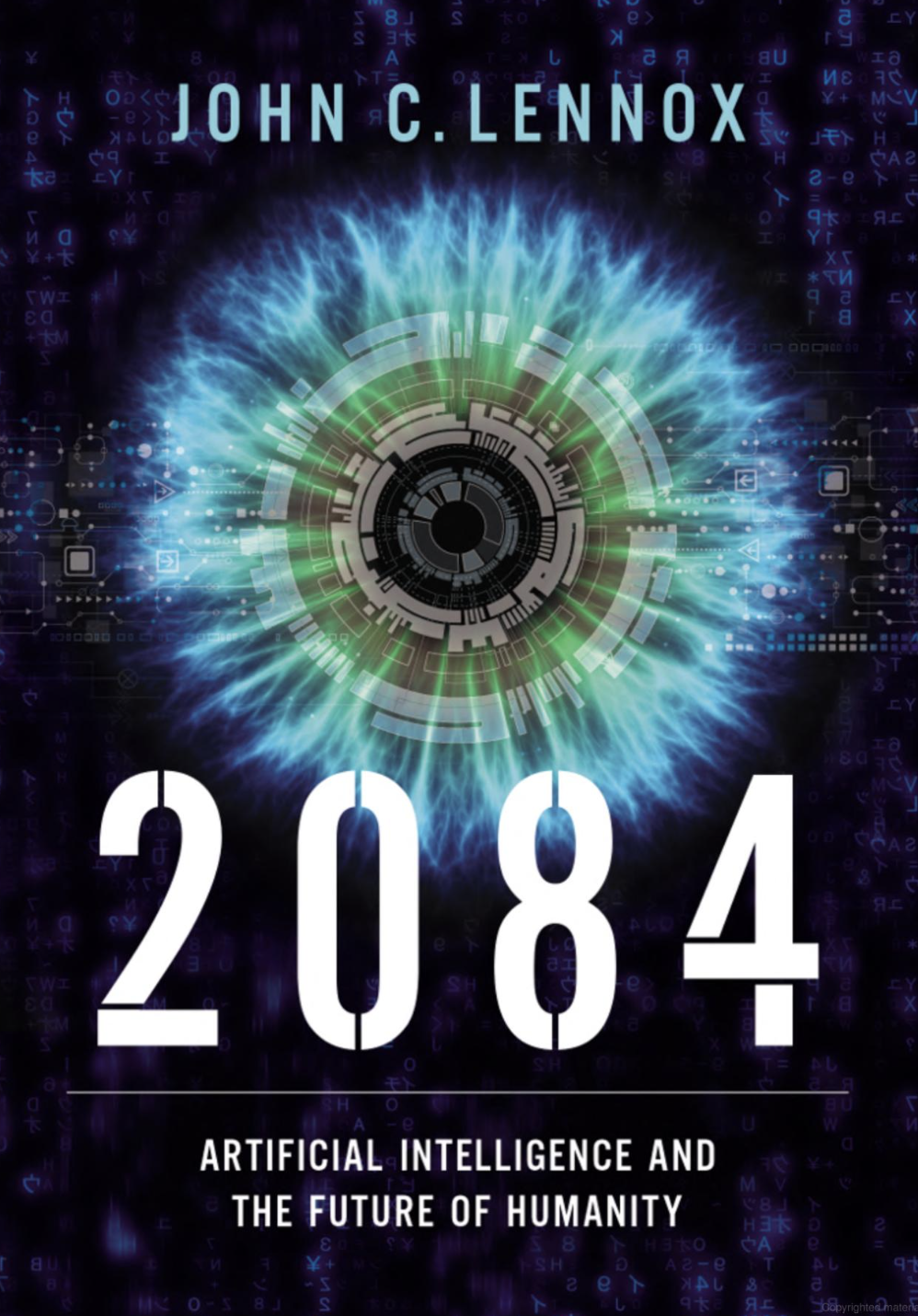
Dr. Lennox will offer a probing conversation centered on the current and future impact of artificial intelligence technology. He will discuss the current state of AI, its benefits, dangers and future implications. He will explain the current capacity of AI, its advantages and disadvantages, the facts and fiction. Will Artificial Intelligence usher in a new utopia or a surveillance society dystopia? How do we protect our privacy in an age of digitalization of everything and deep machine learning? He authored the book, 2084: Artificial Intelligence and the Future of Humanity (Zondervan, 2020).
Biography
John Lennox is Emeritus Professor of Mathematics at the University of Oxford. He is a bioethicist, philosopher, author, and Christian apologist. He has written many highly-regarded books on religion, ethics and the relationship between science and faith, which covers key developments in technological enhancement, bioengineering and AI. Over the past 15 years, Lennox has been part of numerous public debates defending the Christian faith, including debates with Christopher Hitchens, Michael Shermer and Richard Dawkins. He has lectured and given courses to enthusiastic audiences on science and Christian faith around the globe.
Templeton Green College
Questions to Consider:
Are we happy with AI surveillance capitalism?
How does ethics catch up with the speed of technological innovation? What is morally essential to all humans?
What are the implications of moving beyond ‘Narrow’ AI to AGI or Artificial General Intelligence (transhumanism)?
Do we like Yuval Noah Harari’s idea of humans as ‘hackable animals’, with the potential of becoming like gods?
How are we to understand the AI Religion of Neil MacCarthur?
How does utopian ideology operate in the AI space?
Proposed GFCF Speakers for 2023-24 Academic Year: The purpose of the Forum is dialogue across disciplines, ideologies or philosophical persuasions. Dialogue on key issues brings one’s graduate experience to life. Come and meet new friends at GFCF, stimulating interlocutors that could last a whole lifetime.
We explore new ideas, insights and paradigms, featuring inspiring new research, publications and critical thought. We cooperate financially with other agencies such as Canadian Scientific and Christian Affiliation and Corpus Christi College at UBC. The philosophical foundations of the Forum include a broadly-based discursive, open-minded Christian theism, respecting the long history of tradition within the context of our pluralistic society. Our target audience is the senior members of the UBC research community: faculty members, postgraduate students and postdoctoral fellows. Our proposal works in tandem with former UBC President Ono’s emphasis on ecumenical cooperation among Christian institutions and agencies—creating space for discussions about faith and culture.
February 14, 2024: Christopher Watkin, French Studies, Monash University, Melbourne, Australia. The Bible as a Tool for Changing Culture.
Abstract: The question of the relationship between Christianity and culture increasingly takes centre stage in debates both within and outside the church today. This talk reflects on how a constructive, nuanced and–to many modern ears–fresh vision for contemporary society can be drawn from a rich engagement with the Bible’s storyline, guided by Augustine’s magisterial work City of God. What might it look like to reimagine Augustine’s mode of engagement with late Roman society in our own cultural moment of late modernity?
Biography: Christopher Watkin (PhD, University of Cambridge) is senior lecturer in French studies at Monash University in Melbourne, Australia. He is a scholar with an international reputation in the area of modern and contemporary European thought, atheism, and the relationship between the Bible and philosophy. His published work runs the spectrum from academic monographs on contemporary philosophy to books written for general readers, both Christian and secular, and include Difficult Atheism, From Plato to Postmodernism; Great Thinkers: Jacques Derrida. His recent impressive 2022 tome with Zondervan Academic is Biblical Critical Theory: How the Bible’s Unfolding Story Makes Sense of Modern Life and Culture.
2. March 13, 2024, Abigail Favale, Professor in the McGrath Institute for Church Life, Notre Dame University. Examining the Sources of Gender: Why Sexual Difference Matters.
Abstract: How do contemporary theories of gender compare to the understanding of gender in the Christian imagination? This talk will provide a sketch of two distinct paradigms–the “gender paradigm” and the “Genesis paradigm”–and bring those two frameworks into conversation with one another, highlighting points of consonance and dissonance between them.
Biography: Abigail Favale, Ph.D., is a professor in the McGrath Institute for Church Life at the University of Notre Dame. She has an academic background in gender studies and feminist theory, and writes regularly about these topics from a Catholic perspective. She is the author of The Genesis of Gender: A Christian Theory (Ignatius 2022) and Into the Deep: An Unlikely Catholic Conversion (Cascade 2018), as well as numerous essays and articles. Abigail’s essays and short stories have appeared in print and online for publications such as First Things, The Atlantic, Church Life, and Potomac Review. She was awarded the J.F. Powers Prize for short fiction in 2017.
Dr. Matthew Lynch, Associate Professor of Old Testament
Regent College, Vancouver, B.C.
The Land Keeps the Score: Violence in Creation According to the Old Testament
Tuesday, March 14 @ 4 PM
Abstract
Most scholarly and popular treatments of violence in the Old Testament focus on social or personal dimensions of violence and its impact. Similarly, contemporary Christian attempts to grapple with the challenges of violence in Scripture often focus on the ethics of human-on-human or divine-on-human violence. While important, these approaches fail to address the Old Testament’s emphasis on the land as a victim of human violence. According to the Old Testament, the land bears the marks of violence because violence is, fundamentally, an ecocidal phenomenon. This talk explores this reality in Scripture and its implications for contemporary ethical reflection.
Biography
Matthew Lynch spent the final year of his doctoral studies in Göttingen, Germany, remaining there as a postdoctoral researcher for another year following the completion of his PhD. He was subsequently hired at the Westminster Theological Centre in the UK, serving for seven years there in roles including Dean of Studies, Academic Dean, and Lecturer in Old Testament. During this time, he also lectured at Nashotah House and Grand Rapids Theological Seminary. He is the author of First Isaiah and the Disappearance of the Gods (Eisenbrauns), Portraying Violence in the Hebrew Bible: A Literary and Cultural Study (Cambridge, 2020), and Monotheism and Institutions in the Book of Chronicles: Temple, Priesthood, and Kingship in Post-Exilic Perspective (Mohr Siebeck, 2014). He also has a forthcoming volume entitled Flood and Fury: Engaging Old Testament Violence (IVP). Matthew is a founder and co-host of the OnScript podcast. He is married with two children.
C. S. Lewis knew well that Christians walk “by faith, not sight”, as the apostle Paul puts it (2 Corinthians 5:7). But what is the difference between faith and sight? How does faith differ from delusion? Michael Ward will explore these themes as they are presented in Lewis’s writings, especially his fiction, and in particular his best-known works, the seven Chronicles of Narnia.
Biography
Michael Ward is the author of the award-winning Planet Narnia: The Seven Heavens in the Imagination of C.S. Lewis (Oxford University Press), co-editor of The Cambridge Companion to C. S. Lewis (Cambridge University Press) and presenter of the BBC television documentary, The Narnia Code. A member of the Faculty of Theology and Religion at the University of Oxford in his native England, Dr. Ward is also Professor of Apologetics at Houston Christian University. He studied English at Oxford, Theology at Cambridge, and has a PhD in Divinity from St. Andrews University, Scotland. He played the role of Vicar in the film ‘The Most Reluctant Convert: The Untold Story of C.S. Lewis’ and handed a pair of X-ray spectacles to Agent 007 in the James Bond movie ‘The World Is Not Enough.’ In real life he is a Catholic priest, assisting at Holy Rood Church, Oxford alongside his work as an academic. His latest book is After Humanity: A Guide to C.S. Lewis’s The Abolition of Man (Word On Fire Academic).
Next in GFCF Series: Save the Date
Tuesday, March 14 @ 4 PM: Dr. Matthew Lynch, Old Testament Professor @ Regent College
The Land Keeps the Score: Violence in Creation According to the Old Testament
Bibliography of C.S. Lewis Oeuvre
1. C.S. Lewis: A Biography, Roger Lancelyn Green and Walter Hooper (HarperCollins, revised and expanded edition 2002)
2. C.S. Lewis, A Companion and Guide, Walter Hooper (HarperCollins, 1996)
3. The Cambridge Companion to C.S. Lewis, ed. Robert MacSwain and Michael Ward (Cambridge University Press, 2010)
4. Planet Narnia: The Seven Heavens in the Imagination of C.S. Lewis, Michael Ward (Oxford University Press, 2008)
5. The Lion’s World: A Journey into the Heart of Narnia, Rowan Williams (SPCK, 2012)
6. After Humanity: A Guide to C.S. Lewis’s The Abolition of Man, Michael Ward (Word on Fire Academic, 2021)
7. The Tao of Right & Wrong by Dennis Danielson (Regent College Publishing)
8. On Obstinency and Belief by C.S. Lewis
Register for the Science & Faith Conference at Trinity Western University on January 28, 2023: www.csca.ca/van-23
Sir Roger Scruton: Anybody who goes through life with an open mind and heart will encounter moments that are saturated with meaning, but whose meaning cannot be put into words. Those moments are precious to us. When they occur, it is as though, on the winding, ill-lit stairway of our life, we suddenly come across a window… through which we catch sight of another, brighter world–a world to which we belong but which we cannot enter. There are many who dismiss this world as an unscientific fiction. I am not alone in thinking it real and important.
Does it matter how Christians think about political proposals that touch on moral issues such as poverty relief, racial justice, immigration, abortion, marriage, sexuality, and other matters that relate to biblical principles and human dignity? What happens when Christians disagree with each other on these issues? Is one political position or political party more “Christian” than another? In this session, Dr. Williams will explore the recent history of Christian political activity and the reasons why political disagreements among Christians have become more heated lately. He will then look at some ways to transcend partisan thinking and pursue Christian principles in the political sphere that should challenge those on both the left and the right.
Biography
Daniel K. Williams received his PhD from Brown University in 2005. He is a professor of history at the University of West Georgia and has taught there since 2005. He was the William E. Simon Visiting Fellow in Religion in Public Life, James Madison Program in American Ideals and Institutions, Princeton University, 2011-12. Dr. Williams’ research focuses on the intersection between politics and religion in modern America.He is author of numerous articles and books including: God’s Own Party: The Making of the Christian Right. Oxford University Press, 2010 which was the recipient of the 2011 Phi Alpha Theta Best First Book Award; The Election of Evangelical Jimmy Carter, Gerald Ford and the Presidential Contest of 1976. University Press of Kansas, 2020; and The Politics of the Cross: A Christian Alternative to Partisanship. Eerdmans, 2021 (the theme of this presentation).
Basilian Distinguished Fellow of Contemporary Catholic Thought
Immediate Past InterimPrincipal of St Mark’s College and President at Corpus Christi College
An Open Inquiry into the Ongoing Clerical Sex Abuse Crisis
September 22 @ 4 PM
Abstract
This will involve Michael’s state of the art exploration when it comes to clerical abuse of children: improvements made, new challenges that have surfaced, suggestions on moving forward. He co-authored with Peter Kavanaugh the ground-breaking book Suffer the Children Unto Me.
Biography
Michael W. Higgins, a native Torontonian, is an author, scholar, Vatican Affairs Specialist for The Globe and Mail, Papal Commentator for the CTV Network, educator, CBC Radio documentarian, columnist. He has served as President and Vice-Chancellor of two Canadian Catholic universities, St. Jerome’s University in the University of Waterloo, Ontario, and St. Thomas University, Fredericton, New Brunswick, and as Vice-President for Mission and Catholic Identity at Sacred Heart University in Fairfield, Connecticut. He was named Distinguished Professor Emeritus of Catholic Thought in the Fall of 2020. He isImmediate Past Interim Principal and President respectively of St. Mark’s College and Corpus Christi College, at University of British Columbia. He is author of several important books and a recognized Thomas Merton scholar.
Next in GFCF Series: 4 PM, Tuesday, October 25, 2022: Daniel K. Williams, Professor of History, University of West Georgia. How Should Christians Think about Politics?
See his recent publication: The Politics of the Cross: A Christian Alternative to Partisanship. Eerdmans, 2021
Science is perhaps the most successful endeavour that human beings have ever engaged in. It is tempting to think that it should also answer the big questions of life, such as why we are here and whether there is a purpose to life.
Such hopes give impetus to modern versions of secularism. At the same time a fully fleshed out scientism, the idea that only science brings us reliable knowledge about the world, remains unpopular in the academy, in part because it hollows out these existential questions. I will argue that it is not hard to see that neither science, nor any conceivable advance of science, can answer such existential questions. Nevertheless, implicit versions of scientism remain surprisingly influential in the academic world. What can and should we do about this? (See also Tom McLeish & Sy Garte lectures on science and faith)
Ard Louis is Professor of Theoretical Physics at the University of Oxford, where he leads an interdisciplinary research group studying problems on the border between chemistry, physics and biology at the Rudolf Peierls Centre for Theoretical Physics. He also writes and speaks widely on science and faith, for which in 2013 he was elected a member of the International Society for Science and Religion. He recently made the 4-part documentary Why Are We Herewith David Malone and appeared in The Story of God with Morgan Freeman, giving him an Erdős–Bacon number of 6.











 UBC Graduate & Faculty Christian Forum