This lecture unveils the transformative power of Palestinian Christian Orthopathos – a potent understanding of suffering that fuels empowerment and missional justice. The lecture will delve into the Sermon on the Mount, explore the profound suffering of the Apostle Paul, and illuminate other scriptural insights. The exploration forges a powerful connection between missional justice and radical peacemaking within the crucible of Palestinian suffering, revealing Christ’s suffering and teachings as a vital orthopathic worldview for navigating immense challenges.
Biography
Yohanna Katanacho is currently the academic dean at Nazareth Evangelical College in Israel. He is a Palestinian Israeli Evangelical Christian who studied at Bethlehem University (B.Sc.), Wheaton College (M.A.) and Trinity Evangelical Divinity School (Master of Divinity & Ph.D.). He has taught at colleges and seminaries in many countries. He has authored or contributed to dozens of books and numerous articles in Arabic and English. Professor Rev. Katanacho is also the Lead Translator of the Colloquial Galilean Bible which is in the North Levantine Arabic dialect.
Response by Ron Dart
Ron Dart taught in the Department of Political Science-Philosophy-Religious Studies for 35 years at the University of the Fraser Valley in British Columbia. He was on staff with Amnesty International in the 1980s with the focus Religion and Human Rights in the Middle East. Ron was featured in the 2010 film With God on our Side (dealing with the Christian Zionist-Palestinian tensions) and his book Canadian Christian Zionism: A Tangled Tale is one of the first books on Canadian Zionist ideology. Ron has published 42 books and multiple articles, many dealing with Jewish-Christian Zionism and the Palestinians. Ron now teaches Classics at St. Stephen’s University which offers an MA with Bethlehem Bible College.
_______________________
Orthopathos (also commonly spelled orthopathy) is a theological term from Greek roots: ortho- meaning “right,” “straight,” or “correct,” and pathos (or patheia) referring to passion, affection, emotion, feeling, or suffering.It denotes “right affections,” “right passions,” “right feelings,” or “right emotions” — the proper alignment, formation, and orientation of the heart’s deepest sentiments, desires, motivations, and affective life toward God and in accordance with divine will.Orthopathos completes the classic Christian triad alongside:
Orthodoxy— right belief / correct doctrine (head/mind)
Orthopraxy (or orthopraxis) — right practice / correct action and behavior (hands/feet)
Together they form a three-dimensional vision of authentic Christian faith and spiritual formation: right thinking, right doing, and right feeling/loving.
Core Meaning and EmphasisOrthopathos stresses that genuine Christian life is not only cognitive (believing true things) or behavioral (doing good works), but deeply affective and relational. It involves cultivating “holy tempers” or godly dispositions — such as love for God and neighbor, compassion, humility, joy in God, hatred of sin, zeal for justice, peace, hope, and other fruit of the Spirit — so that the believer’s emotions, passions, and inner motivations are transformed and rightly ordered by the Holy Spirit.
It is not about fleeting or subjective emotional highs, nor mere sentimentality. Instead, it concerns a renewed heart whose affections align with God’s own heart: rejoicing over what delights God, grieving over what grieves God, showing compassion where God shows compassion, and being motivated by love rather than fear, pride, apathy, or disordered desires.
Historical and Theological Context: The term gained prominence in the 1970s–1990s among Wesleyan, Pentecostal, and some liberation theology circles (e.g., Samuel Solivan’s work on orthopathos as the liberating transformation of suffering/pathos by the Spirit, especially in contexts of oppression). It draws inspiration from figures like John Wesley, who emphasized the renewal of holy affections/tempers as central to salvation and sanctification. It has since appeared in evangelical, Reformed, and broader Protestant discussions as a way to insist that emotional and motivational formation is essential — not secondary — to discipleship.
Summary Orthopathos reminds us that loving God fully requires not only confessing truth and obeying commands, but having a heart that spontaneously feels and desires in ways that mirror God’s own character and passions. As one summary puts it, “the things that break the heart of God break the heart of His people, and the things that inflame the heart of God burn within His people.”
Poem by Yohanna Katanacho
This is a season of weeping and mourning, but it is not void of hope. Our tears are the bridge between brutality and humanity. Our tears are the salty gates for seeing a different reality. Our tears are facing soulless nations and a parched mentality. Our tears are the dam preventing rivers of animosity. For the sake of the mourning men, cry with us to reflect your amity. For the sake of the poor children, cry with us demanding sanity. For the sake of lamenting mothers, refuse violence and stupidity. Love your enemies and cry with them is the advice of divinity. Blessing those who curse is the path to genuine spirituality. Pouring tears of mercy and compassion is true piety. Pray with tears, for the sake of spreading equity. Followers of Jesus: crying is now our responsibility. But don’t cry for your friends only—cry also for your enemy.
Our GFCF Speaker Series for the 2025-26 Academic Year: The purpose of GFCF (aka The Forum) is dialogue across disciplines, ideologies, and philosophical persuasions, engaging key issues in scholarship and society from an orthodox Christian faith. We continue to explore new ideas, offer fresh, well-researched perspectives on current issues. Our target audience for this pertinent dialogue includes the senior members of the UBC teaching and research community: faculty, postgraduate students and postdoctoral fellows. We welcome alumni to participate as well. Our January speaker, Dr. Kevin Vanhoozer, will deliver a newly-minted paper. The venue is on Zoom, and the recordings will be posted on YouTube to allow a broader, international audience to participate. A few of our previous speakers have drawn over one thousand views in this way. Participants for this year are teaching in Israel, South Africa, Chicago, and Virginia. They bring a global perspective to their critical insights. It is our privilege to engage with these accomplished scholars. GFCF welcomes your questions and insights.
Notice:To be added to our mailing list, write:gfcfevents@gmail.com
Kevin Vanhoozer
Three Documents of the University: Reading Nature, Culture, and Scripture Theologically.
Universities arguably exist to make the universe legible (readable) and intelligible (understandable). In Christian tradition, what the Second Helvetic Confession calls the “Book” of nature is as readable as the book of Scripture, for both ultimately precede through the Logos in whom all things hang together. The “book” of culture, human history, is similarly legible, because it is written by those created in the image of the Logos. Modern secular universities, however, struggle to make sense of these three documents. What Hans Frei termed the “eclipse” of biblical narrative led to a “great reversal” in hermeneutics in which the biblical narrative gave way to other frames of reference. This presentation argues that the prevailing metaphysical frames of reference used today in the natural and human sciences, as well as in biblical studies, are ultimately unable to read rightly their respective texts. Brief examples from each of the three books – the laws of nature; human dignity; the historical Jesus – illustrate both the problem and also the way forward. This involves a retrieval of a theological frame of reference that privileges biblical narrative and enables faith-fuelled scholarship to gain a deeper understanding of reality.
Response:Jens Zimmermann, PhD University of British Columbia, PhD Johannes Gutenberg.He is the J.I. Packer Chair of Theology at Regent College. Trained in both Comparative Literature and Philosophy, his research focusses on theological anthropology and epistemology, of who we are and how we know. Among other works, he has published books on university education (The Passionate Intellect: Incarnational Humanism and the Future of University Education, with Norman Klassen, Baker Academic 2006), the importance of humanism for Western culture (Humanism and Religion: A Call for the Renewal of Western Culture, Oxford University Press, 2012), hermeneutics (Hermeneutics: A Very Short Introduction, OUP 2014), and the theology of Dietrich Bonhoeffer (Dietrich Bonhoeffer’s Christian Humanism, OUP 2019).
Biography
Kevin J. Vanhoozer (Ph.D., Cambridge University on Paul Ricoeur) is Research Professor of Systematic Theology at Trinity Evangelical Divinity School. Previously, he served as Senior Lecturer in Theology and Religious Studies at the University of Edinburgh, Scotland (1990-98) and as Blanchard Professor of Theology at the Wheaton College Graduate School in Chicago (2009-2012). He is the very articulate author of twelve books, including The Drama of Doctrine: A Canonical-Linguistic Approach to Christian Theology; plus Faith Speaking Understanding: Performing the Drama of Doctrine, and his impressive 2024 volume Mere Christian Hermeneutics: Transfiguring What it Means to Read the Bible Theologically. He is presently at work on a three-volume systematic theology. In 2017, he chaired the steering committee and drafted A Reforming Catholic Confession to mark the 500th anniversary of the Reformation. He is currently Senior Fellow of the C. S. Lewis Institute. He is an amateur classical pianist, and finds that music and literature help him integrate academic theology, imagination, and spiritual formation.
The ancients inhabited a ‘saturated’ frame of reference in which earthly, natural things are transitory signs of an eternal, supernatural realm of higher realities. Charles Taylor—”Modernity is an 18th century revolution in our social imaginary.” (K. Vanhoozer, Mere Christian Hermeneutics, 79-80).
The Bible’s story, read theologically, is sufficient for enabling us to perceive reality differently–not as a closed patio-temporal material nexus, but as created, sustained, and directed by the triune God. ~Kevin Vanhoozer
_________________
Anthony Thiselton Tools on Hermeneutics:
Anthony C. Thiselton (1937–2023) was a prominent British New Testament scholar and theologian, widely regarded as one of the leading figures in biblical hermeneutics (the theory and practice of interpretation, especially of Scripture). His works integrate philosophical hermeneutics, biblical studies, and theology, often engaging thinkers like Heidegger, Gadamer, Ricoeur, and Wittgenstein.Here are his key books specifically on hermeneutics, based on their influence, citations, and recognition in academic discussions:
The Two Horizons: New Testament Hermeneutics and Philosophical Description (1980) This foundational work explores the “two horizons” of the text (historical horizon) and the reader (contemporary horizon), drawing on philosophical figures like Heidegger, Bultmann, Gadamer, and Wittgenstein. It established Thiselton’s reputation in the field.
New Horizons in Hermeneutics: The Theory and Practice of Transforming Biblical Reading (1992) A major expansion and sequel to his earlier work, this comprehensive volume surveys a wide range of hermeneutical theories (including semiotics, reader-response, liberation/feminist approaches, Gadamer, Ricoeur, and more). It serves as an advanced textbook and critical evaluation of modern hermeneutical models.
Thiselton on Hermeneutics: Collected Works and New Essays (2006) A substantial collection of his key writings on hermeneutics from various books and articles, with new appraisals and reflections. It gathers much of his earlier contributions in one place.
Hermeneutics: An Introduction (2009) A more accessible, single-volume textbook synthesizing his decades of teaching. It provides a historical overview (from ancient to modern eras) and covers major thinkers and movements (Schleiermacher, Gadamer, Ricoeur, postmodernism, etc.), making it ideal for students and general readers.
The Hermeneutics of Doctrine (2007) This applies hermeneutical principles to systematic theology and doctrine, examining how interpretation shapes belief formation and theological understanding.
These titles represent his core contributions to hermeneutics. The first three (especially The Two Horizons and New Horizons) are often highlighted as his most influential and in-depth treatments, while Hermeneutics: An Introduction serves as an excellent entry point or overview. Many scholars consider him a leading authority on philosophical hermeneutics in evangelical and broader biblical studies contexts.
______________________________
Mere Christian Hermeneutics: Transfiguring What It Means to Read the Bible Theologically (published 2024 by Zondervan Academic) is Kevin J. Vanhoozer’s ambitious proposal for a “mere” Christian hermeneutic—inspired by C.S. Lewis’s Mere Christianity—that outlines essential, universal principles for reading the Bible faithfully as Scripture across all times, places, denominations, and Christians. It is very ambitious, taking me back through my whole history of theological training and decades of debate (even one between Hans Boersma and Iain Provan at Regent College).
The book addresses two major challenges in biblical interpretation:
The diversity of interpretations even within single Christian communities. We seldom examine this phenomenon in our churches or think more deeply about the kind of Bible reading culture(s) that exists there.
The plurality of “reading cultures” (denominational, academic/disciplinary, historical, and global), each with its own interpretive framework–critical to his thesis. This is what he means by the term ‘hermeneutics’.
Vanhoozer responds by advocating a unified yet diverse approach that bridges the somewhat painful and unnecessary modern divide between biblical studies (often focused on historical-grammatical exegesis) and theology (focussing on larger biblical themes). He critiques polarized “reading cultures” and calls both exegetes and theologians to return interpretation to the church as the primary community for faithful reading. There is a definite existential aspect of his approach. In the end, he wants us to get much more from reading and interpreting the Bible for life lived robustly.
The Central Metaphor and Thesis: The book’s core working image is the transfiguration of Jesus on Mount Tabor (from the Gospels), which Vanhoozer uses to reframe theological interpretation. Many interpreters miss this powerful biblical metaphor. He argues that figural (or “spiritual”) reading does not distort or deny the literal sense (sensus literalis) but glorifies and transfigures it—revealing its deeper, eschatological and Christ-centered meaning. He sees a ‘christocentric’ and ‘christoscopic’ nature to the larger biblical narrative.
He introduces “trans-figural” interpretation as a better alternative to traditional terms like typology or allegory:
It “thickens” the literal sense by following biblical figures across the canon and across redemptive history to their fulfillment in Christ. He fulfills the law and the prophets, fills out their meaning.
It views the literal sense not as merely historical/earth-bound but as eschatologically oriented toward God’s ultimate revelation in Jesus. Scripture is always connected with eternity, the transcendent.
Interpretation therefore becomes a matter of seeing the light of Christ shining through Scripture, transforming both the text’s meaning and the reader. Vanhoozer sees a major emphasis on the “economy of light” across the biblical narrative–from Genesis to Revelation.
This leads to a vision where reading Scripture is intensely dialogical (a response to God’s powerful address and calling to humans), transformative (conforming readers to Christ’s image), and oriented ultimately toward worship, gratitude, and witness. He employs speech act theory (J. L. Austin) and terms like “communicative action” by God to reveal this dynamic. He is known for his very clever usage of contemporary literary devices as we dig deeper to understand Scripture as a living thing that moves a person’s universe.
Book Structure: The book is organized as an “experiment in biblical-theological criticism” divided into three parts:
Part 1: Reading the Bible inside and outside of Church— Surveys the “divided domain” of interpretation, critiques polarized reading cultures (e.g., between modern biblical scholarship and theology), and calls for church-centered approaches that form “gospel citizenship” rather than mere literacy. He appeals for a more mature “Bible reading culture.”
Part 2: Figuring Out Exactly What We Mean by Literal Interpretation— This is critical to his thesis. He redefines the sensus literalis beyond narrow grammatical-historical senses to include eschatological reference and figural depth, moving toward a “trans-figural” literal sense in a “reformed catholic” (Christ-focused, broadly orthodox) paradigm. That’s a mouthful.
Part 3: Transfiguring Literal Interpretation — Applies the transfiguration motif extensively:
Explores light imagery in creation (e.g., Genesis 1:3).
Examines the transfiguration accounts in the Synoptics and John.
Shows how trans-figural reading “unveils” the glory in the letter (e.g., via Paul’s reading of Moses’ veil in 2 Corinthians).
Concludes with how readers themselves are transfigured/transformed through faithful engagement with Scripture and obedience to its tenants (“with unveiled faces”). Kierkegaard would be happy with this stance.
The conclusion envisions “beatific lection”—reading that leads to beholding Christ’s glory and fostering transfigured Christian communities. If we read the Scripture properly, we should be permanently changed by the living, breathing Word of God.
Overall, Vanhoozer’s work is irenic (peace-seeking without shallow compromise), richly interactive with historical interpreters, intensely creative, and provocative. It is a great senior seminar textbook (ThM). It emphasizes that true interpretation glorifies God by enabling us to see and reflect Christ’s light in Scripture out into the world. Reviews, leading to its prize-winning status (Christianity Today’s Book go the Year), praise its depth, creativity, and potential as a landmark in theological hermeneutics, while noting its demanding style and Western focus. It’s aimed at pastors, scholars, and serious readers seeking to read the Bible theologically in a fragmented age, appealing to a much larger frame of reference than we often encounter in the university.
“To read the Bible as God’s word is therefore to encounter something that is living and active: the voice of God, God personally speaking, the triune God in communicative action, doing things with, in, and through human words.” (K. Vanhoozer, 2024, 9)
International Authoritarian Challenges to Democracy
Contact: gfcfevents@gmail.com if you would like to be added to our mailing list.
ResponsePaul Frestonis emeritus professor in Religion and Politics in Global Context at the Balsillie School of International Affairs and Wilfrid Laurier University, Canada. He is also professor colaborador on the post-graduate programme in sociology at the Universidade Federal de São Carlos, Brazil. A naturalized Brazilian of British origin, he has worked mainly on religion and politics, the growth of popular forms of Protestantism in Latin America, and questions of religion and globalization. His books include Evangelicals and Politics in Asia, Africa and Latin America (Cambridge University Press, 2001); and (co-edited) The Cambridge History of Religions in Latin America (Cambridge University Press, 2016).
Abstract for John Owen
Democracy is wobbling in a number of countries at once. This is no accident, because no democracy is an island: countries share a complex social environment that, depending on its content, can “select for” either democracy or authoritarianism. One reason why the environment has lately come to favour authoritarianism is the rise and reassertion of the authoritarian giants, China and Russia. Dr. Owen will discuss the effects of these countries and their policies on world politics, recent developments in the United States, and finally why Christians today ought to cherish constitutional democracy and work for a world that enables its flourishing.
“Christian Political Reserve” by Dr. Paul Freston, Professor Emeritus Wilfrid Laurier University.
The Christian treatment of political differences is extremely important. The Christian community will never be completely united on these questions. Political diversity is normal and positive within the Christian community. It is positive because any uniformity would only exist if it was imposed by an authoritarian political leadership; without that, there will always be a diversity of Christian political opinions. And it is normal because Christian political unity is impossible, for three reasons.
Firstly, because of the absence of a biblical political recipe. The Bible does not exist to substitute for reflection on social, political and economic life, nor to substitute for creatively improving institutions in these areas. While Judaism has the Mosaic law and Islam has sharia law, Christianity has no comparable law. This absence of law is significant for the Christian task in social life. We have no ready-made political recipe applicable anywhere and anytime. Instead of this intellectual short-circuit, we have to constantly go through the hard work, with faithfulness and humility, of relating biblical revelation to the socio-political realities of our own context.
Secondly, Christian political uniformity is impossible because of the distance between the biblical worlds and our world. The New Testament was written for a small transnational community which controlled no territory and had no political power. As for the Old Testament, no country today is in the position of Old Testament Israel; and, in any case, the main principle of Christian interpretation of the Hebrew scriptures is that they should be read in the light of the coming of Christ. The enormous length of the hermeneutical bridge makes it impossible to arrive at a definitive political recipe.
Thirdly, Christian political uniformity is impossible because of the nature of politics. As the famous (pseudo) definition says, politics is the art of the possible. This means that two equally devout Christians, who reach similar conclusions from their reading of the scriptures, can still diverge radically in what each one regards as possible and advisable to attempt today, in this country.
The result of all this is a certain lack of political “self-confidence” in Christianity; a certain hesitation in producing political “recipes” in the name of the faith; a certain “reserve”, a non-dogmatism, an ample space for legitimate disagreement between faithful believers.
Due to this Christian political reserve, the politicization of the faith is disastrous, because it tries to charge a political “toll-fee” of those who wish to travel on the way of faith. This politicization is also idolatrous, because it confuses the absolute and the relative. Even while we affirm the importance of politics and the duty of Christians to participate in it, even passionately, we should always remember that our political opinions belong to the sphere of the relative and not of the absolute, and should never be placed on the same footing as those convictions which form the heart of the Christian faith.
Because of all this, we need democracy. While liberal democracy is insufficient and always disappoints, it is still irreplaceable. Democracy doesn’t exist to guarantee the victory of our side and of our vision of society. It exists to allow the ongoing defence of diverse projects for society, including our own.
Role of Churches & Christian Leadership in Politics
Firstly, it is important that those who hold official leadership positions (pastors, priests, bishops), while of course exercising their prerogatives as citizens, should preserve a certain public aloofness with regard to partisan politics in democratic contexts. Certainly, they should not be candidates for public elective office, as long as they are exercising pastoral roles.
Nevertheless, it is part of their responsibility as teachers to give instruction regarding all dimensions of discipleship, including the political dimensions. Besides specific implications, this also includes encouraging the political vocations of some members, and the responsible citizenship of all members.
During election campaigns, churches should consider encouraging debates among members, with serious defenders of each proposal, whether church members or not. The focus should be both on the importance of the questions involved, but also on the ability to debate civilly and to disagree without breaking off relations.
It is important that Christians refrain from giving way to political hatreds, but instead give an example to society of a community which is not politically united (which would be undesirable, since it could only be the fruit of manipulation), but of a community united in the Christian treatment of political differences. We remember the biblical exhortations to love everyone, but especially brothers and sisters in the faith (e.g. John 13:34-35, in which the ability of Christians to love each other is the most important factor in their reputation before the world; and Galatians 6:10, in which “to do good” is recommended above all to those who share the same faith). It is especially tempting to nurture an antipathy for those who are closest to us, but who nevertheless disagree with us! If Christians are not capable of living this ethic of love, inside the Christian community and in the midst of the political torment, we have nothing to contribute to society.
~Paul Freston, PhD, Professor Emeritus, Wilfrid Laurier University
“Open liberalism … is shaped by what Charles Taylor calls an ‘ethic of authenticity’: the understanding of life … that each one of has his/her own way of realizing our humanity, and that it is important to find and live out one’s own, as against surrendering to conformity with a model imposed on us from outside, by society, or by the previous generation, or religious or political authority (aka expressive individualism).” John Owen, The Ecology of Nations, 90.
“Open liberalism prizes markets and private enterprise for the power they bring to the individual, regardless of where she lives. It tells people that they are primarily consumers of the goods of capitalism rather than the producers of them. It seeks complete openness, a world without legacy boundaries to human interaction and fulfillment.” John Owen, The Ecology of Nations, 91.
See also David P. Gushee, Defending Democracy from its Christian Enemies.
Summary of The Ecology of Nations: American Democracy in a Fragile World Order by John M. Owen IV. John M. Owen IV’s 2023 book applies an ecological metaphor to international relations, framing regimes (democracies vs. autocracies) as “species” that actively “engineer” their global environment to favor their survival and spread. Drawing on Woodrow Wilson’s idea of making the world “safe for democracy,” Owen argues that liberal democracies are currently losing this competition due to internal flaws and aggressive autocratic strategies. The book critiques the overextension of liberal ideals while advocating for a more resilient, community-focused liberalism. Below are the main points, structured thematically:
1. The Concept of “Ecosystem Engineering” in Global Politics
Nations, like keystone species in biology (e.g., beavers building dams or ants creating nests), intentionally reshape the international “ecosystem” (norms, institutions, alliances, and trade rules) to suit their regime type.
Democracies engineer for openness, multilateralism, and human rights to reinforce liberal values at home; autocracies engineer for stability, hierarchy, and control to sustain authoritarian rule.
Historical example: Post-WWII U.S.-led order (e.g., Bretton Woods, NATO) created a democratic-friendly environment that boosted liberal stability worldwide.
2. Why Democracies Are Losing the Competition
Liberalism has evolved into a disruptive force emphasizing perpetual openness, individualism, and global intervention, which undermines domestic cohesion and exposes democracies to backlash (e.g., polarization, inequality).
Autocracies like China and Russia are more effective “engineers”: China exports surveillance tech and economic dependencies; Russia spreads disinformation and supports illiberal allies, tilting the global environment toward autocracy.
Democracies’ “great delusion”: The unrealistic belief that they can universally convert autocracies into liberals, leading to failed interventions (e.g., Iraq, Afghanistan) and fatigue.
3. Interdependence of Democracies and the Fragility of U.S. Democracy
American democracy’s health depends on a global network of fellow democracies; isolation or a autocracy-dominant world erodes U.S. institutions through contagion (e.g., via migration, media, or economic ties).
Owen emphasizes that internal U.S. challenges (e.g., polarization) are exacerbated by external pressures, making ecosystem engineering a matter of national survival.
4. Recommendations: Reimagining Liberalism for Resilience
Shift liberalism from disruption to commitment, community, and country: Prioritize domestic renewal (e.g., reducing inequality, fostering civic bonds) over endless global promotion.
Long-term goal: Bias the international order toward democracy without overreach, ensuring a “safe” global habitat for liberal species.
Owen’s analysis blends IR theory, history, and biology for a lucid, provocative take on why democracy feels besieged—and how to fight back strategically. The book won the 2025 Grawemeyer Award for Ideas Improving World Order.
See also Anne Applebaum, Autocracy, Inc.: The Dictators Who Want to Run the World, Signal, 2024.
Timothy Snyder books: On Freedom; On Tyranny; The Road to Unfreedom.
Glenn Tinder, The Political Meaning of Christianity.
Larry Siedentop, The Invention of the Individual.
David T. Koyzis, Citizenship Without Illusions: A Christian Guide to Political Engagement.
Professor of Environmental Governance at Stellenbosch University
Responsible Creation Care in an Age of Conflicting Perspectives
Thursday, October 2, 2025, @ 4:00 PM
Response by: Dr. Loren Wilkinson, Professor Emeritus Interdisciplinary Studies, Regent College; Author of: Circles and the Cross: Cosmos, Consciousness, Christ, and the Human Place in Creation. Cascade Books, 2023.
Note: Write to gfcfevents@gmail.com to be added to our mailing list for upcoming lectures.
Abstract
Based on a rigorous understanding of the biblical discourse, there is no credible evidence to support the claim that authentic Christian spirituality conflicts with a responsible view of creation care. Some scholars do agree, however, that a critique is called for: This includes certain perspectives on God’s relationship with creation, on humankind’s spiritual, but also earthly, bodily and material value, on the implications of salvation for all of creation, and on certain future escapist expectations. Biblically, the narrative clearly articulates this world as God’s creation from Genesis to Revelation. Guidelines for an effective response are that creation care needs to arise from the core of Christian faith and that Christians cannot responsibly act as if there is any part of creation or human action that falls outside the scope of the gospel as revealed in Scripture.
Biography
Martin de Wit is Professor of Environmental Governance at Stellenbosch University, South Africa and coordinates the School of Public Leadership’s Postgraduate Diploma and Master’s Programmes in Environmental Management. His research work focuses on care for creation, the interactions between the economy and the environment (notably climate, ecosystems, energy, and waste), and on the place of the human person in environmental governance and social order. His latest book, written in Afrikaans, is called Skeppingsorg: ‘n Aanset tot interpretasie van sekere Bybeltekste oor die mens se verhouding tot die natuurlike omgewing [Creation Care: An Onset to Interpreting Certain Biblical Texts on Humanity’s Relationship to the Natural Environment] (Durbanville: AOSIS, forthcoming). He serves on the Board of Directors of the creation care organization A Rocha.
Sponsored by:UBC Graduate & Faculty Christian Forum & Canadian Scientific & Christian Affiliation
Many Thanks to the UBC Murrin Fund
Martin de Wit:
“A theology and ethics of creation care is a whole-gospel issue, but with a specific entry-point in the person and work of Jesus Christ. A Christian ethic of responsible stewardship, earthkeeping or creation care needs to start with a high christology as the revelation of God’s will has reached its finality in the revelation through his Son.”
“In its critique, the aim of a theology and ethics of creation care would not be to be novel in the first place, but to bring improved clarity to the Christian faith confessed by the church throughout the ages and to living in this spectacular “universe [that] is before our eyes like a beautiful book in which all creatures, great and small, are as letters to make us ponder the invisible things of God.”[1]
“A reformational approach is proposed, which starts with the authority of God’s Word, and the holy, catholic, Christian churches’ faithful confession of that Word. A central feature of a reformational approach is that it is Christocentric and Trinitarian. These are not abstract theological doctrines but deeply affects Christian lives. Christian identity formation in Christ challenges the natural desires of the human being through the text and calls for a renewal of our minds.”
Build Your Reading List on Creation Care
Steven Bouma-Prediger, For the Beauty of the Earth.
Douglas Moo, Creation Care: A Biblical Theology of the Natural World.
R. J. Berry & Laura S. Meitzner Yoder, John Stott on Creation Care.
Loren Wilkinson, Circles and the Cross: Cosmos, Consciousness, Christ, and the Human Place in Creation.
Darrel Falk, On the Divine Origin of Our Species.
Dennis Hollinger, Creation and Christian Ethics: Understanding God’s Design for Humanity and the World.
Faith Skinner, Living Green, Loving God: A Christian Guide to Creation and Conservation.
1.Thursday, October 2, 2025, @ 4:00 PM, Martin P. de Wit, Responsible Creation Care in an Age of Conflicting Ideologies.
Abstract: Based on a rigorous understanding of the biblical discourse, there is no credible evidence to support the claim that authentic Christian spirituality conflicts with a responsible view of creation care. Some scholars do agree, however, that a critique is called for: This includes certain perspectives on God’s relationship with creation, on humankind’s spiritual, but also earthly, bodily and material value, on the implications of salvation for all of creation, and on certain future escapist expectations. Biblically, the narrative clearly articulates this world as God’s creation from Genesis to Revelation. Guidelines for an effective response are that creation care needs to arise from the core of Christian faith and that Christians cannot responsibly act as if there is any part of creation or human action that falls outside the scope of the gospel as revealed in Scripture.
Biography: Martin de Wit is Professor of Environmental Governance at Stellenbosch University, South Africa and coordinates the School of Public Leadership’s Postgraduate Diploma and Master’s Programmes in Environmental Management. His research work focuses on care for creation, the interactions between the economy and the environment (notably climate, ecosystems, energy, and waste), and on the place of the human person in environmental governance and social order. His latest book, written in Afrikaans, is called Skeppingsorg: ‘n Aanset tot interpretasie van sekere Bybeltekste oor die mens se verhouding tot die natuurlike omgewing [Creation Care: An Onset to Interpreting Certain Biblical Texts on Humanity’s Relationship to the Natural Environment] (Durbanville: AOSIS, forthcoming). He serves on the Board of Directors of the creation care organization A Rocha.
2. Tuesday, November 25, 2025, 12:00 PM, John Owen, International Authoritarian Challenges to Democracy.
Abstract: Democracy is wobbling in a number of countries at once. This is no accident, because no democracy is an island: countries share a complex social environment that, depending on its content, can “select for” either democracy or authoritarianism. One reason why the environment has lately come to favour authoritarianism is the rise and reassertion of the authoritarian giants, China and Russia. Dr. Owen will discuss the effects of these countries and their policies on world politics, recent developments in the United States, and finally why Christians today ought to cherish constitutional democracy and work for a world that enables its flourishing.
3. Tuesday, January 27, 2026 @ 12:00 PM Kevin Vanhoozer, Three Documents of the University: Reading Nature, Culture, and Scripture Theologically.
Abstract: Universities arguably exist to make the universe legible (readable) and intelligible (understandable). In Christian tradition, what the Second Helvetic Confession calls the “Book” of nature is as readable as the book of Scripture, for both ultimately precede through the Logos in whom all things hang together. The “book” of culture, human history, is similarly legible, because it is written by those created in the image of the Logos. Modern secular universities, however, struggle to make sense of these three documents. What Hans Frei termed the “eclipse” of biblical narrative led to a “great reversal” in hermeneutics in which the biblical narrative gave way to other frames of reference. This presentation argues that the prevailing metaphysical frames of reference used today in the natural and human sciences, as well as in biblical studies, are ultimately unable to read rightly their respective texts. Brief examples from each of the three books – the laws of nature; human dignity; the historical Jesus – illustrate both the problem and also the way forward. This involves a retrieval of a theological frame of reference that privileges biblical narrative and enables faith-fueled scholarship to gain a deeper understanding of reality.
Biography: Kevin J. Vanhoozer (Ph.D., Cambridge University on Paul Ricoeur) is Research Professor of Systematic Theology at Trinity Evangelical Divinity School. Previously, he served as Senior Lecturer in Theology and Religious Studies at the University of Edinburgh, Scotland (1990-98) and as Blanchard Professor of Theology at the Wheaton College Graduate School in Chicago (2009-2012). He is the very articulate author of twelve books, including The Drama of Doctrine: A Canonical-Linguistic Approach to Christian Theology; plus Faith Speaking Understanding: Performing the Drama of Doctrine, and his impressive 2024 volume Mere Christian Hermeneutics: Transfiguring What it Means to Read the Bible Theologically. He is presently at work on a three-volume systematic theology. In 2017, he chaired the steering committee and drafted A Reforming Catholic Confession to mark the 500th anniversary of the Reformation. He is currently Senior Fellow of the C. S. Lewis Institute. He is an amateur classical pianist, and finds that music and literature help him integrate academic theology, imagination, and spiritual formation.
4. Wednesday, March 18, 2026 @ 12:00 PM, Rev. Dr. Yohanna Katanacho, Unleashing Palestinian Christian Orthopathos: Empowerment and Missional Justice Amidst Suffering.
Abstract: This lecture unveils the transformative power of Palestinian Christian Orthopathos – a potent understanding of suffering that fuels empowerment and missional justice. The lecture will delve into the Sermon on the Mount, explore the profound suffering of the Apostle Paul, and illuminate other scriptural insights. The exploration forges a powerful connection between missional justice and radical peacemaking within the crucible of Palestinian suffering, revealing Christ’s suffering and teachings as a vital orthopathic worldview for navigating immense challenges.
Biography: Yohanna Katanacho is currently the academic dean at Nazareth Evangelical College in Israel. He is a Palestinian Israeli Evangelical Christian who studied at Bethlehem University (B.Sc.), Wheaton College (M.A.) and Trinity Evangelical Divinity School (Master of Divinity & Ph.D.). He has taught at colleges and seminaries in many countries. He has authored or contributed to dozens of books and numerous articles in Arabic and English. Professor Rev. Katanacho is also the Lead Translator of the Colloquial Galilean Bible which is in the North Levantine Arabic dialect.
What features define human life and the value of the individual? How do individuals and communities understand and withstand suffering and pain? What is good dying? In our time, the essential human questions are often viewed primarily as bioethics issues. In reality, these are not exclusively medical or bioethical inquiries. Rather they are complicated and challenging ethical questions with which all human beings and societies must grapple. How does Christian philosophy and theology inform these life and death questions at deeper, more foundational levels?
Biography
Dr. Quentin Genuis MD is an Emergency Physician at St. Paul’s Hospital in Vancouver, and the Physician Ethicist for Providence Health Care. He holds a Master of Letters in Ethics from the University of St. Andrews, Scotland. He teaches in academic, clinical, professional, and lay settings on a variety of issues related to bioethics. His research and writing interests include the autonomy debates, end-of-life care, compassion, human dignity, addictions, and theological anthropology.
C. S. Lewis famously spoke of fleeting experiences of joy he had early in life, a longing for something this world cannot satisfy. Dr. Begbie will creatively explore this through music, comparing this pre-Christian unfulfilled desire with Christian hope.
Biography
Jeremy Begbie is the Thomas A. Langford Distinguished Research Professor of Theology at Duke Divinity School, and McDonald Agape Director of Duke Initiatives in Theology and the Arts. He teaches systematic theology, and specializes in the interface between theology and the arts. He is Senior Member at Wolfson College, Cambridge, and an Affiliated Lecturer in the Faculty of Music at the University of Cambridge. His books include Theology, Music and Time (Cambridge University Press); Resounding Truth: Christian Wisdom in the World of Music (Baker/SPCK); and Music, Modernity, and God (Oxford University Press); and Abundantly More (Baker). Jeremy is a very engaging speaker who has taught widely in the UK and North America, and delivered multimedia performance-lectures in many parts of the world. https://imagejournal.org/article/a-conversation-with-jeremy-begbie/
Concerning Abundantly More: The Theological promise of the Arts in a Reductionist World,
Late-modern culture has been marred by reductionism, which shrinks and flattens our vision of ourselves and the world. Jeremy Begbie believes that the arts by their nature push against reductionism, helping us understand and experience more deeply the infinite richness of God’s love and the world God has made. Begbie in this work analyses and critiques reductionism and its effects. He shows how the arts can resist reductive impulses by opening us up to an unlimited abundance of meaning. And he demonstrates how engaging the arts in light of a trinitarian imagination (which itself cuts against reductionism) generates a unique way of witnessing to and sharing in the life and purposes of God. This trajectory keeps our culture open to the possibility of God.
Below are some mind-expanding thoughts from Begbie’s book. May you discover more of the unfathomable depths of Christ and richness of your faith: Christ in you, between you, your family, and your friends. This is the kind of theology that makes a big difference. Chapter 9 is very helpful on the Arts and the local church. Could this God be the source of our primordial human longing?
God is Uncontainable or Unlimited by time and space. “There is always more to God than we could ever think or say, always more than could be thought or said.” (J. Begbie, 2023, 129). “God is other than the world, and in this sense transcendent, but transcendent in a manner that transcends all creaturely types of transcendence. As transcendent, God is present to, upholds, and carries forward the entire contingent order with all its levels.” (J. Begbie, 2023, 127) “God cannot be circumscribed by the finitude of this world…. God cannot be encompassed or confined by any object or event in the world of space and time, nor by the space-time continuum as a whole…. God exceeds all human systems of representation, and that of course includes human thought and language—exceeding our cognitive grasp or the limitations of human speech.”
God is Infinity—in relation to time, God’s eternity; in relation to space, God’s immensity. God cannot be confined by the time-space continuum. God is incomparable as articulated in the encounter and calling of Moses: “I Am that I Am.” God is not a member of a quantitative series, like a first cause within creation. He is the very ground of being. God is incomparable re: power as both quality and quantity. “The created order does not contain its own explanation, its deepest secret lies beyond itself. Because of its dependence on and openness to the agency of the infinite God, it is possessed of an inexhaustible depth. There is always more that can be discovered, thought, and spoken.” (J. Begbie, 2023, 155) “All zero-sum views of divine and human freedom—views that assume the two are inherently competitive—will also be put in question; divine freedom will be reimagined as freedom for the love and freedom of the other.” (2023,156)
God is Uncontainable re: glory, goodness, excellence, truth, beauty, personal warmth and sacrificial love (agape). He is the greatest good imaginable, the most splendid beauty, the Logos of all truth.
He is, in balance, a Covenant-Keeping God: He is with you, for you, among you (past, present and future). This love is an active pressure within the godhead, dedicated to our human good. It is a resilient, steadfast love and faithfulness—articulates often as the God of Abraham, Isaac, & Jacob … (a multi-generational, promise-keeping God). This involves a grand narrative scope and trajectory of God’s involvement with our world. Begbie speaks of the “Unbounded pressure of covenantal goodness, other-directed faithfulness.” It is infinite, eternal, immense. John Webster speaks of: “God’s boundless capacity for nearness.” The results for us are an incomprehensible, ineffable expression of the Lord’s steadfast love: “He is resolved not to let God’s gracious purposes for creation come to nothing.” He is God-for-God’s-people & God-for-God’s world. (J. Begbie, 2023, 136)
God is the eternal and the supreme architect and possessor of life and the source of all life: i.e., God’s energizing and life-giving power, sustaining created existence in relation to its Creator. (Deut 5:26; Jer 10:2-16; Matt 16:16; Heb 3:12). Patristic Theology states that: The world is possessed of a pattern of divine rationality by virtue of which all finite forms of this world are related to their ultimate origin. All creatures find their primordial coherence and ground in the logos. (J. Begbie, 2023,168)
How should we understand the relationship between theology and science? How should this understanding shape our daily lives and decisions? Gain fresh insights as we consider some key theological and ethical issues in the biological sciences. Together, we’ll explore questions around creation and evolution; the role of genetics in human behaviour; the relationship between brain, mind, and free will; and distinctions between healing and enhancement.
Abstract
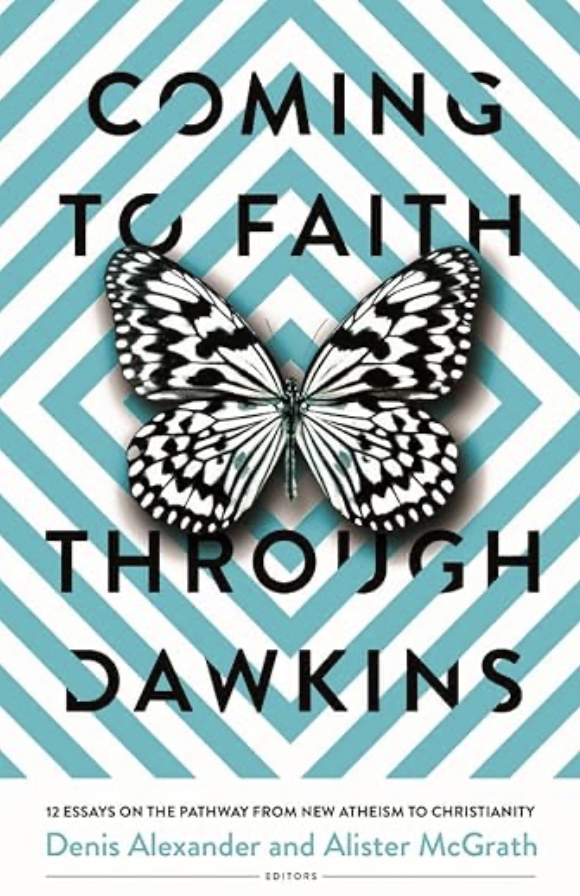
The so-called ‘New Atheism’ movement that came to prominence in the earlier part of this century has now declined. However, it has left in its wake an intriguing residue of religious and cultural consequences. One of the most prominent spokespersons for the movement has been Professor Richard Dawkins from Oxford University. The 2023 Kregel book, co-edited by Alister McGrath and Denis Alexander, Coming to Faith Through Dawkins, comprises twelve essays written by twelve different authors from five different countries, describing how the works of Dawkins and other New Atheist writers were influential in leading them from atheism or agnosticism to Christian faith. This lecture will review the roots of the New Atheism movement, and why it has led some former skeptics to Christian faith.
Biography
Denis Alexander, PhD, a noted geneticist, biochemist, and cancer researcher, is the Founding Director (Emeritus) of The Faraday Institute for Science and Religion, Cambridge, where he is Emeritus Fellow of St. Edmund’s College. He is past Chair of the Molecular Immunology Program and Head of the Laboratory of Lymphocyte Signalling and Development at The Babraham Institute, Cambridge. Dr. Alexander’s latest books are: Is There Purpose in Biology? Oxford: Lion, 2018; and Are We Slaves to Our Genes? Cambridge University Press, 2020. He gave the 2012 Gifford Lectures at St. Andrew’s University.
GFCF Mailing List: gfcfevents@gmail.com to be added to our information flow about future events.
“Faith is more than evidence and reason, but it is definitely not less.” ~Johan Erasmus, working on his PhD at North-West University in South Africa on the subject of race and reconciliation
“The promotion of a naive humanism predicated upon a noble savage embodying humanity’s innate goodness, free from the corruption of civilization, might lead to a crippling narcissism. In a universe where humans are basically all good, it makes sense that people who disagree with me are basically all bad.” ~Johan Erasmus, South Africa
“Dawkins acknowledges that a simple survival-of-the-fittest explanation is not sufficient to explain morality.” ~Nick Berryman, an Engineering Manager for a cutting-edge technology company
“The Christian explanation is that an intelligent designer is the ultimate source [of information]. This is not a “God of the gaps” argument. Coded information when found is always regarded as evidence of an intelligent source. This is true when archaeologists discover ancient symbols. It would be true if scientists discovered a coded message from outer space.” ~Nick Berryman
Biological Complexity: “Dawkiinites seem to agree that as a complex phenomenon, life is statistically highly improbable, and as improbable as it is, chance (in its metaphysical sense) is not a satisfactory explanation as to how the wondrous complexity of life on Planet Earth came about…. Contrary to Dawkin’s claims, natural selection does not overcome the problem of the statistical improbability of the occurrence of life…. Dawkins commits the category mistake by treating probability as a property of complexity. ~Louise Mabille, a Nietzsche scholar
Many Thanks to the UBC Murrin Fund + the Canadian Scientific & Christian Affiliation
Recent Selected Alexander Publications in Science and Religion
Alexander, D. R. (2001) ‘Rebuilding the Matrix – Science and Faith in the 21st Century’, Oxford: Lion Publishing, hb 512 pp. pb edn 2002. US hb edn 2003; French edn 2004; Turkish edn 2010; Chinese edn 2013.
Alexander, D.R. and White R.S. (2004) ‘Beyond Belief – Science, Faith and Ethical Challenges’ Oxford: Lion Publishing.
Alexander, D.R. (Ed + Chapter). (2005) ‘Can We Know Anything? Science, Faith and Postmodernity’, Leicester: Apollos.
Alexander, D.R. (2008) ‘Science and religion – negotiating the 21st century rapids’, in A. Bentley (ed) The Edge of Reason, London: Continuum.
Alexander, D.R. (2008, 2nd edn 2014) ‘Creation or Evolution – Do We Have to Choose?’, Oxford: Monarch.
Alexander, D.R.and Numbers, R.L. (eds) (2010) ‘Biology and Ideology from Descartes to Dawkins’, University of Chicago Press.
Alexander, D. R. (2011) ‘The Language of Genetics – an Introduction’. Philadelphia: Templeton Foundation Press and London: Darton, Longman & Todd.
Alexander, D.R. (2012) ‘A Critique of Intelligent Design’ in Darwinism and Natural Theology: Evolving Perspectives (ed Andrew Robinson), Newcastle: Cambridge Scholars Publishing.
Alexander D.R. (2012) ‘Science and Religious Belief in the Modern World: Challenges and Opportunities’ in Science and Religion: Christian and Muslim Perspectives (ed David Marshall), Georgetown University Press, pp 35-45.
Alexander D.R. (2012) ‘Creation and Evolution’ in Blackwell Companion to Science and Christianity (eds James Stump and Alan Padgett), pp 233-245.
Alexander, D.R. (2012) ‘The Spirit of God in Evolutionary History’ in The Spirit in Creation and New Creation[ed Michael Welker], Eerdmans, 2012.
Alexander, D.R. (2013) ‘L’age d’Adam: deux modeles pour le dialogue entre la Genese at la Science’, in Adam qui es-tu? (Lydia Jaeger, ed), Paris: Editions-Excelsis, pp. 111-128.
Alexander, D.R. (2013) ‘The Implications of Evolution for Religious Belief’ in K. Kampourakis (ed) Philosophical Issues in Public Education, Springer, pp 179-204.
Alexander, D.R. (2013) in Can Science Dispense With Religion? (ed. Mehdi Golshani), Amin Research and Cultural Center, Malaysia, pp. 21-39.
Alexander, D.R. (2014) ‘Order and emergence in biological evolution’, Faith & Thought, April, pp. 18-38.
Alexander, D.R. (2014) ‘The Faraday Institute for Science and Religion – the First Seven Years’, in The Science and Religion Dialogue[Michael Welker, ed], Peter Lang, pp73-86.
Whiteway E. and Alexander, D.R. (2015) ‘Understanding the Causes of Same-Sex Attraction’, Science and Christian Belief, 27:17-40.
Alexander, D.R. [2017] Genes, Determinism and God, CUP [The Gifford Lectures].
Alexander, D.R. [2018]. ‘Creation, Providence and Evolution’ in Andrew B. Torrance and Thomas H. McCall [eds] Knowing Creation Vol 1, Zondervan, pp. 261-285.
Alexander, D.R. [2018] Is There Purpose in Biology?, Oxford: Monarch.
Alexander, D.R. [2018] ‘Order and Emergence in Biological Evolution’, in Gerrit Glas and Jeroen de Ridder (eds), The Future of Creation Order, Springer, pp 151-169.
Alexander, D.R. [2019] ‘Healing, Enhancement and the Human Future’, Case Quarterly 53: 4-9, 2019.
Alexander, D.R. [2020] Are We Slaves to Our Genes? [Cambridge University Press]
Professor of Philosophical Theology at DePaul University
Tuesday, September 24, 2024 @ 4:00 PM
Abstract
This lecture explores two sides of the modern economy: the rationalized and disenchanted world of the Amazon warehouse, and the enchanted world of products that magically appear on our doorsteps. Dr. Cavanaugh will argue that these are two sides of the same coin. First, he will show that even Max Weber himself could not shake free of the idea that modernity was haunted by enchantment in production. Second, he will look at Karl Marx’s analysis of enchantment in consumption. Finally, he will argue that the biblical concept of idolatry captures our current cultural moment: a shift in what we worship to things of our own creation.
Biography
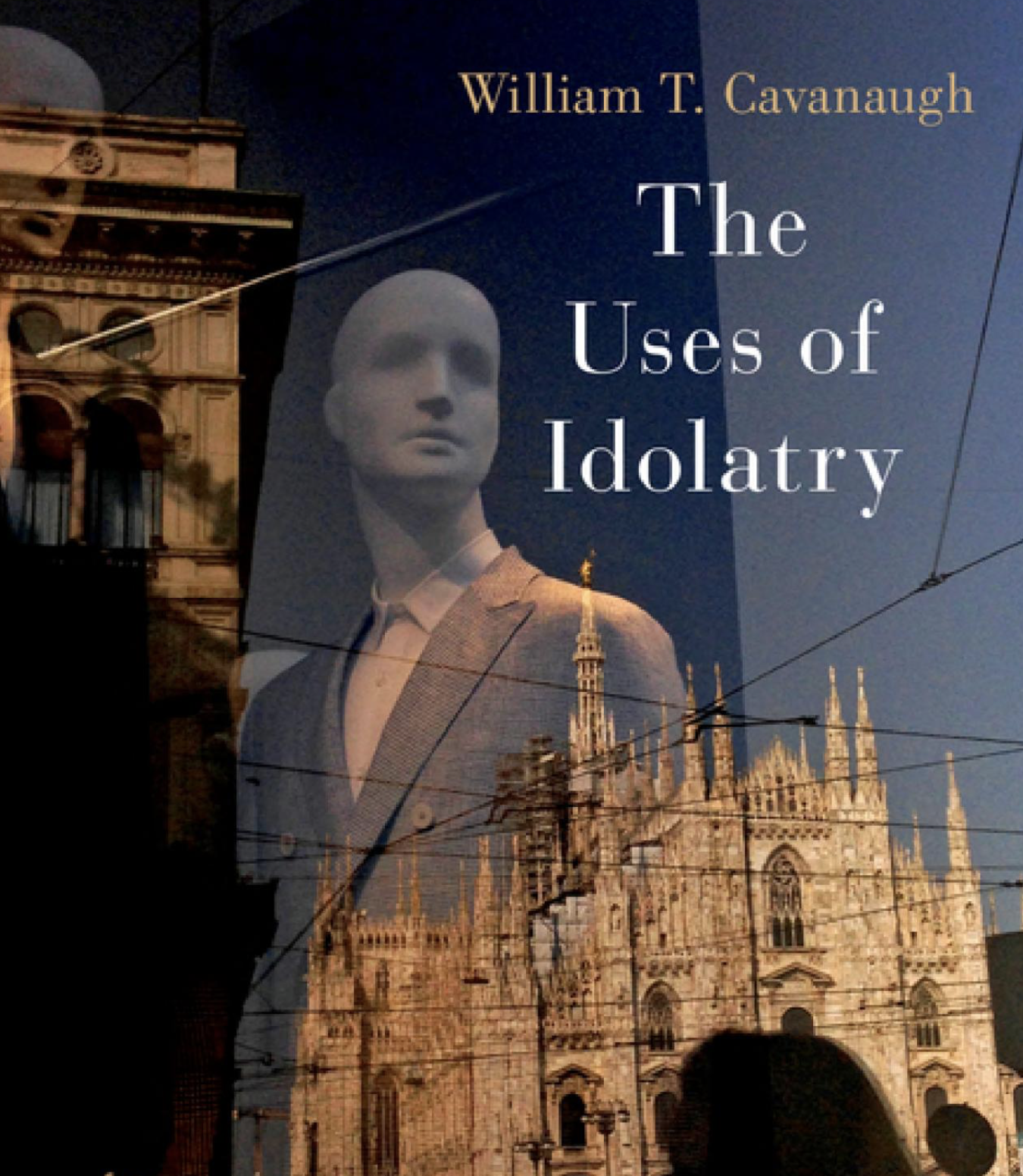
William T. Cavanaugh, PhD from Duke University, is Professor of Catholic Studies and director for the Centre for World Catholicism and Intercultural Theology at DePaul University in Chicago. He is the author of The Myth of Religious Violence, Oxford University Press, 2009; and The Uses of Idols, Oxford University Press, 2024. His specialty is political theology, economic ethics, and ecclesiology. In his 2024 tome, Dr. Cavanaugh reveals his excellent scholarship in this deeply researched topic of cultural idolatry, offering a sustained, cogent, sympathetic critique in a wonderful model of public theology. This impressive work ranges across the fields of history, philosophy, political science, sociology, and cultural studies. For this lecture, special attention to chapters 3. and 7. will help.
“Idolatry is the human creation of systems that react back upon us and come to dominate us as false gods.” ~Bill Cavanaugh
Cavanaugh’s Research Interests
His major areas of research have to do with our encounter/engagement with social, political, and economic realities. He has authored six books and edited three more. His books and articles have been published in 10 languages. He has dealt with themes of the Church’s social and political presence in situations of violence and economic injustice. He just recently published a book on secularization and idolatry, called The Uses of Idolatry, exploring the ways in which a supposedly disenchanted Western society remains enchanted by nationalism, consumerism, and the cult of celebrity. He teaches in an interdisciplinary way, showing the riches and challenges of Christian tradition through art, theology, scripture, music, poetry, history, novels, etcetera.
Jean-Luc Marion once described idolatry as the ‘low water mark of the divine.’ What he meant was: it is not something to be dismissed. Idolatry, too, is a sort of revelation. William Cavanaugh’s careful, sympathetic exercise in this important book embodies this approach. Akin to Augustine’s theologically inflected ethnography of the late Roman Empire, here Cavanaugh ‘reads’ the rituals of late capitalism in order to discern the devotions of our so-called secular age. But he does so in the spirit of invitation, not denunciation. A wonderful model of public theology written for a wide audience. (James K. A. Smith, author of How (Not) to Be Secular).
“The church is the incubator and the epicentre of counter-desire.” writes former GFCF lecturer Christopher Watkin in Biblical Critical Theory. (473-76) What are the rhythms of our hearts? The contrast below constitutes a veritable manifesto for an alternative outlook/lifestyle. Dr. Christopher Watkin contrasts consumption-desire and biblical intimacy-desire.
Consumption-desire is centred in the consumer, who is always right and votes with the wallet. Intimacy-desire has two poles, the lover and the beloved, who both shape the relationship. Here freedom is defined by the ability to love and give life to one another.
Consumption-desire is cyclical: lack, desire, consumption, satisfaction, dissatisfaction, repeat. Intimacy-desire forges a cumulative depth of relationship over time, investing over and over again continuously.
Consumption-desire is fuelled by the noble lie of ultimate fulfilment–every product and pleasure contributes to the good life. Intimacy-desire is driven by the promise of ultimate fulfilment when “the kingdom of the world has become the kingdom of our Lord and his Messiah.” It seeks to fan into flame, develop and cultivate existing desires to meet the deepest human needs–it is servanthood-oriented or other-oriented.
Consumption-desire is economic, obeying the laws of scarcity, equivalence, merit, and performance. It is motivated by debt. Intimacy-desire is aneconomic, running free in world of bounty, superabundance, gift, and grace. It is motivated by thankfulness and generosity. The principle is: the more I give away, the more I have.
Consumption-desire is mediated by corporations who like monetizable assets like labour, money, our data. It is based on an investment of capital. It calculates and focuses on one’s use value. Intimacy-desire is unmediated: God and church do not want your monetizable assets; they want you, yourself as an end, a valuable image bearer, a member of a family. It is based on an investment of character and wants your full enjoyment/flourishing.
Consumption-desire tends towards restlessness; Intimacy-desire tends towards rest.
Consumption-desire understands pain as lack, to be remedied by further consumption. Intimacy-desire sees pain as growth, to be worked through and harnessed to deepen the relationship.
Consumption-desire is indexed by possessions. Growth comes through accumulating more things, more money and assets. Intimacy-desire is indexed by dispossession–I lose my life in order to save it. My liberation/fulfilment is through self-forgetfulness, kindness, and generosity.
“The power and wisdom we desire, the love and freedom, the rest and satisfaction, the justice and fullness calls us forward…. The cross of Christ is the narrow road to the transfigured fullness of every human desire.” (Christopher Watkin, Biblical Critical Theory, 2022, 433)
Quotes from The Uses of Idolatry
“Circulation, not accumulation, is the point of a gift economy. Abundant life is not defined as possessing more things but as participating in the common good, the circulation of goods to all…. All goods belong to God, are inaugurated by God. What is needed is an economy based in gratuitousness and communion. We are recipients of God’s [superabundant generosity]. The most fulfilled people are those who communicate life to others. Jesus summons us to the revolution of tenderness. Going up against idolatry is fundamentally an act of thanksgiving for all the good gifts that God has lavished upon us. “ (William T. Cavanaugh, The Uses of Idolatry, 2024, 387)
“Our identity as consumers has become our primary—though not our only—identity. We are not primarily warriors or workers or prayers, but consumers, and we define who we are and who we aspire to be through consumption…. There is no benevolent and sovereign subject who becomes self-contradictory in a capitalist society; rather the human subject as such is self-contradictory, both altruistic and selfish, aware and unaware, rational and irrational. Freud connects consumerism with narcissism directly in his discussion of how parents shower their children with gifts as a way to satisfy their own narcissistic desires, while simultaneously thinking of themselves as altruistic…. Narcissism and idolatry are two sides of the same coin, and they lead to diminution of the self. True freedom is found in service to the Creator of that material world; a healthy engagement with the material world requires humility.” (W. T. Cavanaugh, 2024, 289, 327, 329)
2. November 7, 2024 @ 12:00 PM Denis Alexander. Finding God Through Dawkins: a Dramatic Irony
Abstract The so-called ‘New Atheism’ movement that came to prominence in the earlier part of this century has now declined. However, it has left in its wake an intriguing residue of religious and cultural consequences. One of the most prominent spokespersons for the movement has been Professor Richard Dawkins from Oxford University. The 2023 Kregel book, co-edited by Alister McGrath and Denis Alexander, Coming to Faith Through Dawkins, comprises twelve essays written by twelve different authors from five different countries and describes how the works of Dawkins and other New Atheist writers were influential in leading them from atheism or agnosticism to Christian faith. This lecture will review the roots of the New Atheism movement, and why it has led some former skeptics to Christian faith.
Biography Denis Alexander, a noted geneticist, biochemist, and cancer researcher is the Founding Director (Emeritus) of The Faraday Institute for Science and Religion, Cambridge, where he is Emeritus Fellow of St. Edmund’s College. He is past Chair of the Molecular Immunology Programme and Head of the Laboratory of Lymphocyte Signalling and Development at The Babraham Institute, Cambridge. Dr. Alexander’s latest books are: Is There Purpose in Biology? Oxford: Lion, 2018; and Are We Slaves to Our Genes? Cambridge University Press, 2020. He gave the 2012 Gifford Lectures at St. Andrew’s University.
3. Thursday, January 30, 2025 @ 4 PM Jeremy Begbie, Professor of Theology and Music, Duke University C. S. Lewis and Unfulfilled Longing: An Exploration through Music
Abstract C. S. Lewis famously spoke of fleeting experiences of joy he had early in life, a longing for something this world cannot satisfy. Dr. Begbie will creatively explore this through music, comparing this pre-Christian unfulfilled desire with Christian hope.
Biography Jeremy Begbie is the Thomas A. Langford Distinguished Research Professor of Theology at Duke Divinity School, and McDonald Agape Director of Duke Initiatives in Theology and the Arts. He teaches systematic theology, and specializes in the interface between theology and the arts. He is Senior Member at Wolfson College, Cambridge, and an Affiliated Lecturer in the Faculty of Music at the University of Cambridge. His books include Theology, Music and Time (Cambridge University Press); Resounding Truth: Christian Wisdom in the World of Music (Baker/SPCK); and Music, Modernity, and God (Oxford University Press); and Abundantly More (Baker). He is a very engaging speaker who has taught widely in the UK and North America, and delivered multimedia performance-lectures in many parts of the world.
4. Tuesday, March 4 @ 12:00 PM Quentin Genuis Rethinking Medical Ethics in Light of the Good.
Abstract What features define human life and the value of the individual? How do individuals and communities understand and withstand suffering and pain? What is good dying? In our time, the essential human questions are often viewed primarily as bioethics issues. In reality, these are not exclusively medical or bioethical inquiries. Rather they are complicated and challenging ethical questions with which all human beings and societies must grapple. How does Christian philosophy and theology inform these life and death questions at deeper, more foundational levels?
Biography Dr. Quentin Genuis MD is an Emergency Physician at St. Paul’s Hospital in Vancouver, and the Physician Ethicist for Providence Health Care. He holds a Master of Letters in Ethics from the University of St. Andrews, Scotland. He teaches in academic, clinical, professional, and lay settings on a variety of issues related to bioethics. His research and writing interests include the autonomy debates, end-of-life care, compassion, human dignity, addictions, and theological anthropology.
Examining the Sources of Gender: Why Sexual Difference Matters
Two Resources:
1. First, an expert guide on youth gender medicine that Abigail co-wrote with a pediatric endocrinologist; this gives a thorough overview of the research on gender medicine for young people.
2. Second, the study from Finland on the question of suicide mentioned in the discussion, with an analysis of the study here.
Next in GFCF 2024-25
September: William Cavanaugh, The Uses of Idolatry (new book/tome).
November: Denis Alexander, Finding God Through Dawkins.
January: Jeremy Begbie, C. S. Lewis and Unfulfilled Longing: An Exploration through Music.
March: Dr. Quentin Genuis, Rethinking Medical Ethics in Light of the Good.
Abstract
How do contemporary theories of gender compare to the understanding of gender in the Christian imagination? This talk will provide a sketch of two distinct paradigms–the “gender paradigm” and the “Genesis paradigm”–and bring those two frameworks into conversation with one another, highlighting points of consonance and dissonance between them.
Biography
Abigail Favale, Ph.D., is a professor in the McGrath Institute for Church Life at the University of Notre Dame. She has an academic background in gender studies and feminist theory, and writes regularly about these topics from a Catholic perspective. She is the author of The Genesis of Gender: A Christian Theory (Ignatius 2022) and Into the Deep: An Unlikely Catholic Conversion (Cascade 2018), as well as numerous essays and articles. Abigail’s essays and short stories have appeared in print and online for publications such as First Things, The Atlantic, Church Life, and Potomac Review. She was awarded the J.F. Powers Prize for short fiction in 2017.
See also Carl R. Trueman, The Rise and Triumph of the Modern Self.
Quotes from Favale’s Book:
Difference between men and women have too often been used to justify a strict hierarchy of value and roles between the sexes. In the effort to reject this, feminists thought has typically regarded sexual difference itself with hostility and has downplayed difference in order to affirm equal dignity.
We must engage the vital questions of personhood, sex, identity, and freedom at the level of a worldview. The gender paradigm affirms a radically constructivist view of reality, the reifies it as truth, demanding that others assent to its veracity and adopt its language.
The Gender Paradigm (feminism’s offspring): According to the gender paradigm, there is no creator, and so we are free to create ourselves. The body is an object with no intrinsic meaning; we give it whatever meaning we want, using technology to undo what is perceived to be “natural”. We do not receive meaning from God or our bodies or the world–we impose it. What we take to be “real” is merely a linguistic construct; ergo we should consciously wield language to conjure the reality we want. To be free is to transgress limits continually, to unfetter the will. “Woman” and “man” are language-based identities that can be inhabited by anyone. Because truth is just a story we tell ourselves, all self-told stories are true.
Creation/Genesis/Biblical Paradigm: We are unities of body and spirit; our bodies are an integral part of our identity that connect us to the created order and serves as a bridge between our inmost being and the outer world, and a sacramental sign of the hidden mystery of God. Both man and woman are made in God’s image, and our sexual difference is part of the goodness of the created order, signalling that we are made for reciprocal love. We have been granted a share in the divine power of language in order to make words that reveal the truth about ourselves and our world.
Michel Foucault is the god-father of contemporary gender theory. Angela Franks aptly describes the Foulcauldian view of sex, which now holds supremacy in our culture. Sex for Foucault, is about “bodies and pleasures”…. Bodily sex has been divorced from procreative potential, reduced to appearance and pleasure-making.
John Money’s malleable and disembodied concept of gender swept through the academy, becoming thoroughly entrenched in feminist theory and the social sciences…. Sex refers to biology, and gender refers to social meanings attached to sex.... Ultimately the concept of gender has driven a wedge between body and identity.… This has paved the way to an even more fragmented and unstable understanding of personhood. Because gender is no longer anchored in bodily realities, it has become a postmodern juggernaut, impossible to capture, impossible to name. Unlike sex, gender can be continually altered and deployed, and we are witnessing a wide proliferation of its meaning.
Judith Butler, godmother of gender theory … argues that gender is an unconscious and socially compelled performance, a series of acts and behaviours that create the illusion of an essential identity of “man” and “woman”. In this view, gender is entirely a social construct, a complex fiction that we inherit and then repeatedly reenact.
In culture today, we are seeing a gnostic split between body (sex) and soul (gender). We now have an inherently unstable concept of gender. The concept of gender has driven a wedge between body and identity. “Gender” can be continually altered and redeployed, and we are witnessing in real time the wild proliferation of its meaning. From the trans definition, gender identity is seen to be located in the mind. Others see it as merely a social construct.
“The more I study what gender has become, the more it feels like an empty signifier, a word that is only a shell, conveniently waiting to be filled with whatever meaning is most useful. There is a gender category for every proclivity, every flick of mood, every possible aesthetic: Agender, Bigender, Trigender, Demigender, Demifluid, Demiflux, Pangender.” Abigail Favale
There are people in turmoil and the gender paradigm has become the dominant lens for interpreting that turmoil, and that’s not good. We are living in an era when our young women are increasingly deciding they would be better off as men.Many young women are rebelling against the hypersexulaization of the female body, but in doing so, they are turning against the body itself.The female body, in our shared imagination, no longer signals creation, nourishment, and primal compassion, but rather the prospect of sterile pleasure.
Medicalizing the Problem: The affirmation approach encourages violence to the healthy body rather than carefully working through underlying causes of psychological distress and considering ways of managing that distress that does not cause physical harm.
The new wave of pop gender theory offers a choose-your-own-adventure self. This framework, which has captured our cultural imagination, fragments personhood into mix-and-match categories of gender identity, gender expression, sexual orientation, and biological sex.
A Different Way of Seeing: Considering oneself as a being who is created moves the discussion of identity to new ground, setting the frame of a transcendent order–an order beyond the natural that sustains its existence and safe-guards its meaning. To be a creature rather than an accident, establishes the human person as a being-in-relation with the divine.We are not alone in the cosmos.… When we see the world as a created cosmos, this transfigures everything: embodiment, sex, suffering, freedom, desire–this is gathered up into an all-embracing mystery, an ongoing interplay between human and divine…. Once understood as created, selfhood, including one’s sex, becomes a gift that can be accepted, rather than something that must be constructed.
We are confronted in our time with two divergent understandings of freedom: on the one hand, freedom according to postmodernity, an open-ended process of self-definition whose only limit is death; on the other, freedoms an ever-deepening sense of belonging and wholeness, not only with oneself, but in relation to all that is.







 UBC Graduate & Faculty Christian Forum