
Denis Alexander
Biomedical (Cancer) Researcher, Cambridge University
Finding God Through Dawkins: a Dramatic Irony
Summer Regent College Course: Current Issues in Science & Theology with Denis Alexander
May 26–30 • 1:30–4:30 pm1–2 Credits (1 Audit) • INDS/THEO 548
How should we understand the relationship between theology and science? How should this understanding shape our daily lives and decisions? Gain fresh insights as we consider some key theological and ethical issues in the biological sciences. Together, we’ll explore questions around creation and evolution; the role of genetics in human behaviour; the relationship between brain, mind, and free will; and distinctions between healing and enhancement.
Abstract
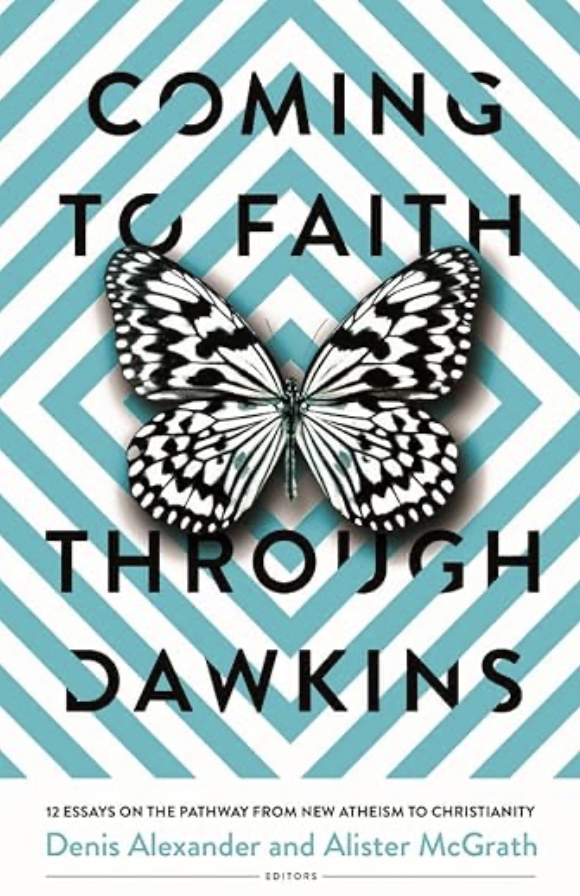
The so-called ‘New Atheism’ movement that came to prominence in the earlier part of this century has now declined. However, it has left in its wake an intriguing residue of religious and cultural consequences. One of the most prominent spokespersons for the movement has been Professor Richard Dawkins from Oxford University. The 2023 Kregel book, co-edited by Alister McGrath and Denis Alexander, Coming to Faith Through Dawkins, comprises twelve essays written by twelve different authors from five different countries, describing how the works of Dawkins and other New Atheist writers were influential in leading them from atheism or agnosticism to Christian faith. This lecture will review the roots of the New Atheism movement, and why it has led some former skeptics to Christian faith.
Biography
Denis Alexander, PhD, a noted geneticist, biochemist, and cancer researcher, is the Founding Director (Emeritus) of The Faraday Institute for Science and Religion, Cambridge, where he is Emeritus Fellow of St. Edmund’s College. He is past Chair of the Molecular Immunology Program and Head of the Laboratory of Lymphocyte Signalling and Development at The Babraham Institute, Cambridge. Dr. Alexander’s latest books are: Is There Purpose in Biology? Oxford: Lion, 2018; and Are We Slaves to Our Genes? Cambridge University Press, 2020. He gave the 2012 Gifford Lectures at St. Andrew’s University.
See also Historian Sarah Irving-Stonebraker on deconstructing atheism in science: https://www.youtube.com/watch?v=Wm-P6YNddyw
GFCF Mailing List: gfcfevents@gmail.com to be added to our information flow about future events.
“Faith is more than evidence and reason, but it is definitely not less.” ~Johan Erasmus, working on his PhD at North-West University in South Africa on the subject of race and reconciliation
“The promotion of a naive humanism predicated upon a noble savage embodying humanity’s innate goodness, free from the corruption of civilization, might lead to a crippling narcissism. In a universe where humans are basically all good, it makes sense that people who disagree with me are basically all bad.” ~Johan Erasmus, South Africa
“Dawkins acknowledges that a simple survival-of-the-fittest explanation is not sufficient to explain morality.” ~Nick Berryman, an Engineering Manager for a cutting-edge technology company
“The Christian explanation is that an intelligent designer is the ultimate source [of information]. This is not a “God of the gaps” argument. Coded information when found is always regarded as evidence of an intelligent source. This is true when archaeologists discover ancient symbols. It would be true if scientists discovered a coded message from outer space.” ~Nick Berryman
Biological Complexity: “Dawkiinites seem to agree that as a complex phenomenon, life is statistically highly improbable, and as improbable as it is, chance (in its metaphysical sense) is not a satisfactory explanation as to how the wondrous complexity of life on Planet Earth came about…. Contrary to Dawkin’s claims, natural selection does not overcome the problem of the statistical improbability of the occurrence of life…. Dawkins commits the category mistake by treating probability as a property of complexity. ~Louise Mabille, a Nietzsche scholar
Many Thanks to the UBC Murrin Fund + the Canadian Scientific & Christian Affiliation
Recent Selected Alexander Publications in Science and Religion
- Alexander, D. R. (2001) ‘Rebuilding the Matrix – Science and Faith in the 21st Century’, Oxford: Lion Publishing, hb 512 pp. pb edn 2002. US hb edn 2003; French edn 2004; Turkish edn 2010; Chinese edn 2013.
- Alexander, D.R. and White R.S. (2004) ‘Beyond Belief – Science, Faith and Ethical Challenges’ Oxford: Lion Publishing.
- Alexander, D.R. (Ed + Chapter). (2005) ‘Can We Know Anything? Science, Faith and Postmodernity’, Leicester: Apollos.
- Alexander, D.R. (2008) ‘Science and religion – negotiating the 21st century rapids’, in A. Bentley (ed) The Edge of Reason, London: Continuum.
- Alexander, D.R. (2008, 2nd edn 2014) ‘Creation or Evolution – Do We Have to Choose?’, Oxford: Monarch.
- Alexander, D.R.and Numbers, R.L. (eds) (2010) ‘Biology and Ideology from Descartes to Dawkins’, University of Chicago Press.
- Alexander, D. R. (2011) ‘The Language of Genetics – an Introduction’. Philadelphia: Templeton Foundation Press and London: Darton, Longman & Todd.
- Alexander, D.R. (2012) ‘A Critique of Intelligent Design’ in Darwinism and Natural Theology: Evolving Perspectives (ed Andrew Robinson), Newcastle: Cambridge Scholars Publishing.
- Alexander D.R. (2012) ‘Science and Religious Belief in the Modern World: Challenges and Opportunities’ in Science and Religion: Christian and Muslim Perspectives (ed David Marshall), Georgetown University Press, pp 35-45.
- Alexander D.R. (2012) ‘Creation and Evolution’ in Blackwell Companion to Science and Christianity (eds James Stump and Alan Padgett), pp 233-245.
- Alexander, D.R. (2012) ‘The Spirit of God in Evolutionary History’ in The Spirit in Creation and New Creation[ed Michael Welker], Eerdmans, 2012.
- Alexander, D.R. (2013) ‘L’age d’Adam: deux modeles pour le dialogue entre la Genese at la Science’, in Adam qui es-tu? (Lydia Jaeger, ed), Paris: Editions-Excelsis, pp. 111-128.
- Alexander, D.R. (2013) ‘The Implications of Evolution for Religious Belief’ in K. Kampourakis (ed) Philosophical Issues in Public Education, Springer, pp 179-204.
- Alexander, D.R. (2013) in Can Science Dispense With Religion? (ed. Mehdi Golshani), Amin Research and Cultural Center, Malaysia, pp. 21-39.
- Alexander, D.R. (2014) ‘Order and emergence in biological evolution’, Faith & Thought, April, pp. 18-38.
- Alexander, D.R. (2014) ‘The Faraday Institute for Science and Religion – the First Seven Years’, in The Science and Religion Dialogue[Michael Welker, ed], Peter Lang, pp73-86.
- Whiteway E. and Alexander, D.R. (2015) ‘Understanding the Causes of Same-Sex Attraction’, Science and Christian Belief, 27:17-40.
- Alexander, D.R. [2017] Genes, Determinism and God, CUP [The Gifford Lectures].
- Alexander, D.R. [2018]. ‘Creation, Providence and Evolution’ in Andrew B. Torrance and Thomas H. McCall [eds] Knowing Creation Vol 1, Zondervan, pp. 261-285.
- Alexander, D.R. [2018] Is There Purpose in Biology?, Oxford: Monarch.
- Alexander, D.R. [2018] ‘Order and Emergence in Biological Evolution’, in Gerrit Glas and Jeroen de Ridder (eds), The Future of Creation Order, Springer, pp 151-169.
- Alexander, D.R. [2019] ‘Healing, Enhancement and the Human Future’, Case Quarterly 53: 4-9, 2019.
- Alexander, D.R. [2020] Are We Slaves to Our Genes? [Cambridge University Press]
See also a similar theme http://www.cbc.ca/ideas/episodes/2012/10/22/the-myth-of-the-secular-part-1/
 UBC Graduate & Faculty Christian Forum